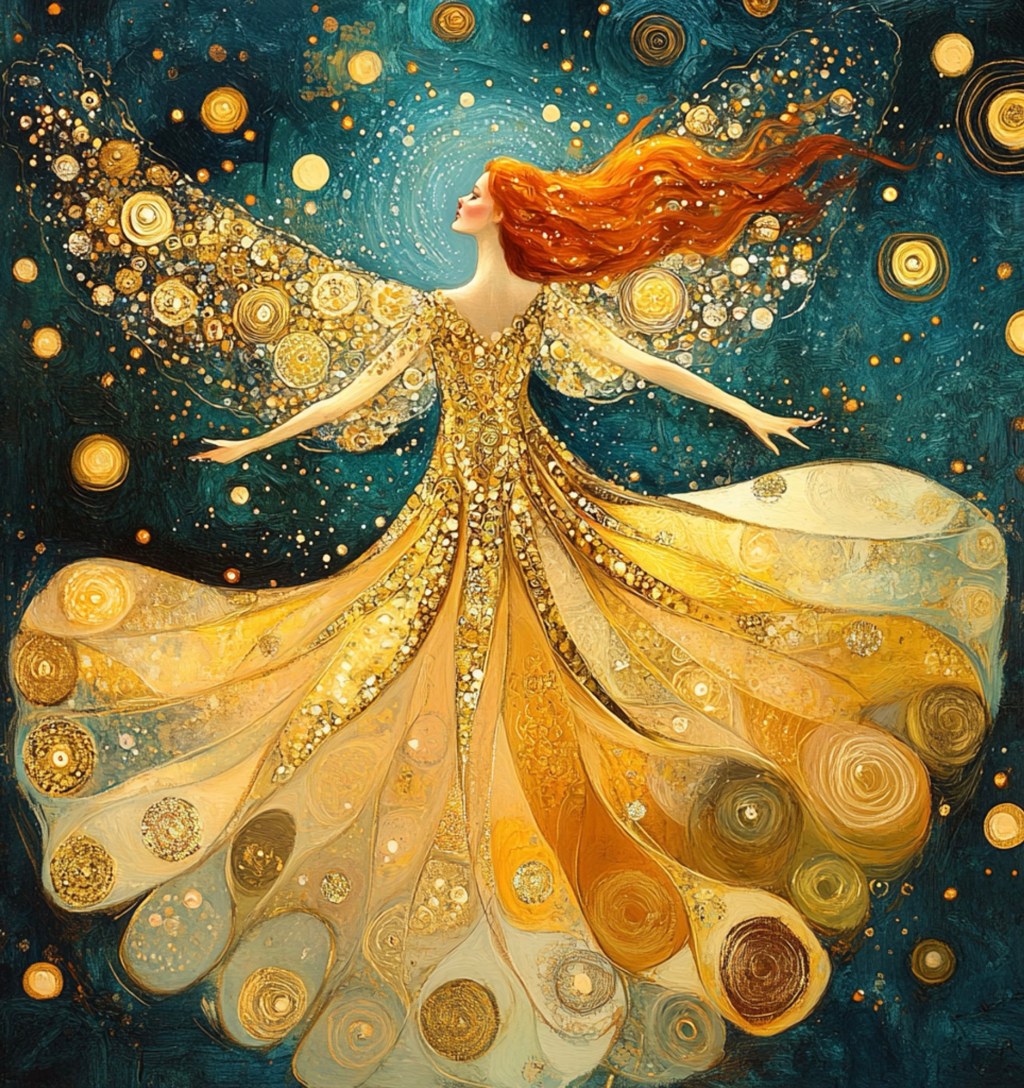
I find it helpful to think of the feminine archetypes as potential sources of inner power. If I can consciously harness their energy, they will serve as a wellspring of richness, texture, and vitality in my life, as well as a source of distinctly feminine strength. If I am able to understand them in a way that gives structure and meaning to my existence, then they may also serve as a gateway to consciousness, or self-realization. Conversely, if my relationship with the inner feminine is adversarial, then it will act as an enemy within.
In a previous post, I talked about the feminine archetypes as being created by the Self. The Self is the seed that germinates all others. That was an insight that came to me on examining the goddess, Tara of the Buddhist pantheon, as well as others from the Roman Empire, Classical Greece, Sumer, and Egypt who Joseph Campbell refers to as “total goddesses”. (For anyone interested in the subject, Campbell’s Goddesses: Mysteries of the Feminine Divine is proving to be an invaluable resource.)
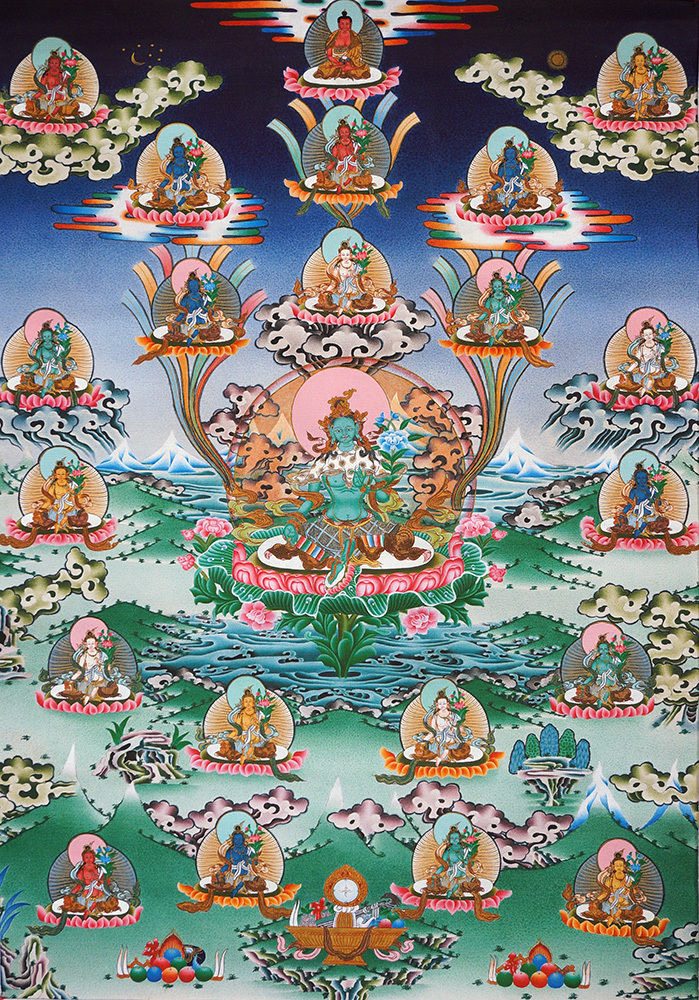
21 Taras, image from Way of Compassion Dharma Center
The term “total goddess” refers to the “Goddess of Many Names” (also Campbell’s term). In Classical myth, she appears as Artemis, Aphrodite, Demeter, Perspephone, Athena, etc. In Egypt, she is Isis. In Sumer, Inanna. Tara, too, in her 21 (or more) manifestations, fits this description. The total goddess has a broad range of qualities and cultural associations. She is at once natural and supernatural, cosmic and specialized, and is imbued with various powers of nature, which are viewed as the seats of feminine power and of which she is both the creator and manifestation in the physical world.
She is the origin point and the metaphorical womb that encloses time and space. Her essence is transformation. She not only embodies the cycles of life-death-rebirth, but she is also the gateway to consciousness, spiritual awakening, creativity, and transcendence. I would suggest that her many names and faces are representative of her role as muse, as architect of the “poetic realization” (Campbell’s term) of the self.
Campbell refers to her as a kind of goddess-mother-creator. This is not to be confused with the archetype of the divine mother as we understand her in the person of the Virgin Mary. Indeed, for those of us who grew up in the Christian tradition (I was raised as a Catholic.), the total goddess represents a very different understanding of the world and of the Self.
Indeed, Campbell notes that the powers personified in the gods and goddesses of pagan traditions were often understood to be the powers of the individual—the divine within. The Goddess, Tara, is viewed in much the same way. In the Buddhist tradition, she represents something like a gateway to consciousness: her many aspects represent opposing forces within the individual that must be reconciled on the path to enlightenment.
The more I learn about the total goddess, the Goddess of Many Names, the more confident I am in my assertion that she represents the Whole Woman, or the Self, and that we come to know the Self by giving form and meaning to the many aspects of the total goddess within (the feminine archetypes)—a process I think is best represented pictorially as the seed of life (as opposed to Jung’s use of the mandala to represent individuation).
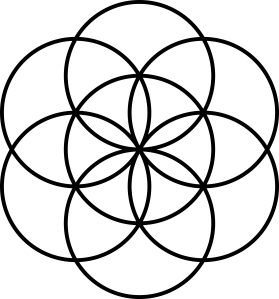
The more I come to know the total goddess, the more certain I feel that the self is the seed that germinates all others. Indeed, the total goddess shows us that it is one of her most creative acts to take the naked energy of the eternal sphere and clothe it in the forms of this world. She is the eternal muse and the embodiment of the divine art of feminine play. She is the poetic realization of the Self, and she teaches us that the path to individuation for women should also be a poetic one. That, of course, is what self-fashioning is all about.


 The Used Life
Leave a comment