

A recipe has no soul. You as the cook must bring soul to the recipe. – Thomas Keller
The kitchen, for me, is the center of the home. It is a sacred space, a place of ritual, intention, and celebration, a place where poetry is made. And cooking isn’t just about nourishment. It’s about comforting and sustaining body and soul. It’s also about bringing people together. Over the years, cooking has become one of the most grounding and creative rituals of my day, on most days. I love the act of planning what to make for dinner, of going to the grocery store (or simply to my pantry) to select the ingredients, and of preparing the meal.
With this post, I’d like to share some things I do to transform cooking from a chore into one of my favorite daily rituals.
Prepare the Space
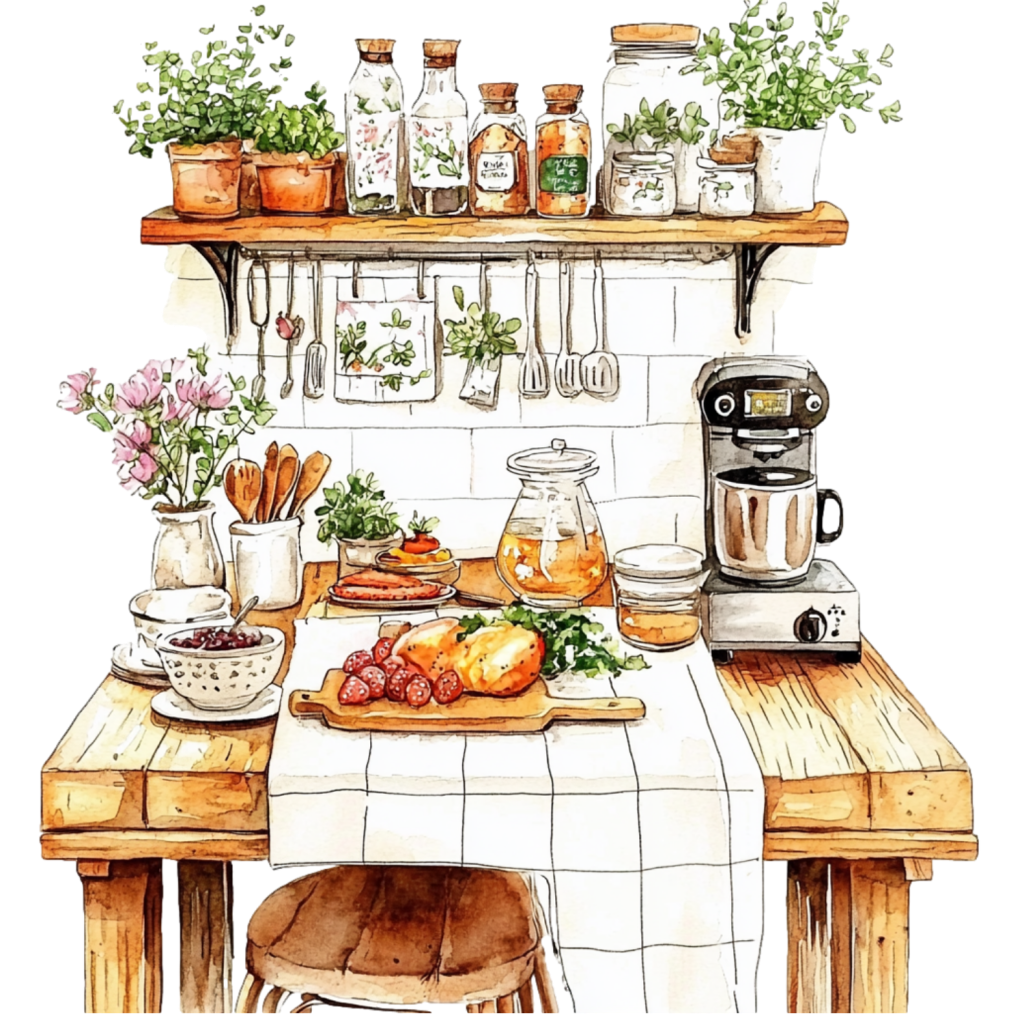
I never cook in a dirty kitchen. In fact, an unkempt kitchen is one of my biggest pet peeves. If I am preparing to make a meal, all clean dishes, whether on the drying rack or in the dishwasher, must be put away. The sink must be empty. The floor and all countertops must be clean. Freeing the space of clutter makes meal preparation not only more pleasant but also much easier.
I then typically put on some background music. Instrumental jazz is often a good selection; although classic rock is also a favorite. I’ve been going with yacht rock quite a bit lately. Whatever fits my mood and enhances the experience.
It also helps to do some basic prep work at this stage. Get pots and pans out. Get the oven preheated. Get your dried spices measured. Maybe also do some strategizing. If I am making multiple dishes with different cooking times, for example, I make a plan for everything to finish at around the same time.
It is worth mentioning, too, that I always clean used cookware, knives, cutting boards, etc. as I cook. It’s much nicer than cleaning up a big mess at the end.
Use Your Senses
This is an important one: using our senses in cooking is not just about immersing ourselves in the experience. Our senses give us vital information, and I think knowing how to use them in the kitchen makes us better cooks. For example, if you’re sautéing garlic, it really helps to know what garlic smells like right before it’s about to burn. If you’ve got your back turned to the stove, it’s very helpful to know what it sounds like when something is simmering or sautéing at a temperature that is too high or too low.
Our senses also help us learn to cook intuitively. An example: one of my favorite dishes to make—and my best dish, in my opinion—is spaghetti and meatballs. My recipe is based on my paternal grandmother’s, though I have tweaked it over the years to make it my own. Like my grandmother, who never wrote her recipe down (I learned by watching her), I would have a difficult time sharing my recipe with another person. Because it’s all intuitive. I know roughly how much garlic and basil I use in my sauce and roughly how much breadcrumbs are in the meatballs and roughly when the consistency of my sauce is as it should be.
I know for certain by what my senses tell me: I know when the amount of a particular ingredient looks right. I know my sauce is simmering properly (low and slow) by the way it looks and sounds. I know when I need to add more salt by the way it tastes. I know it’s reached the proper consistency by the way it feels when I stir it, and most importantly, I know I’m doing things right when my kitchen starts smelling like nana’s house.
As the quote above suggests, we’re the ones who bring soul to a recipe. And that soul comes from creativity, improvisation, and intuition.
Do the Work
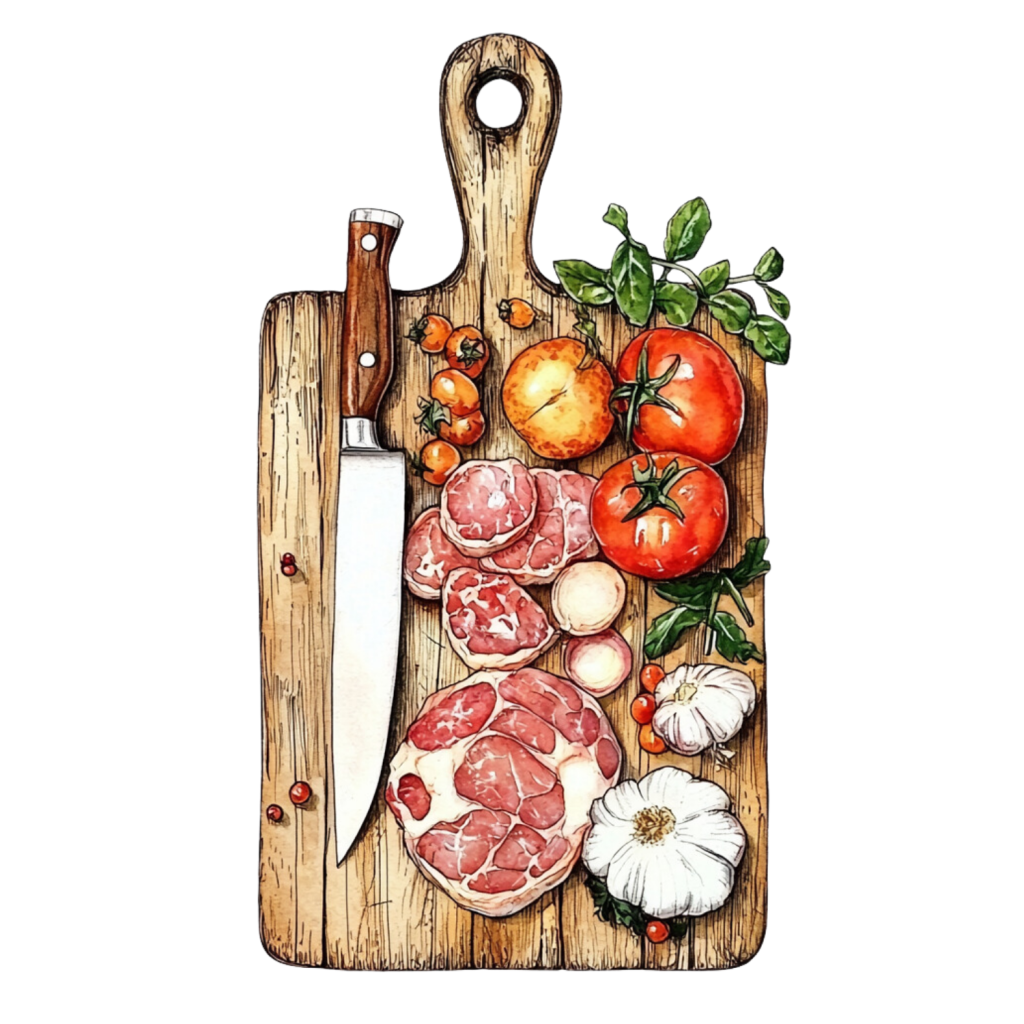
If your goal is convenience, then pre-chopped, pre-cooked, pre-measured ingredients may be helpful. But in my opinion, if your goal is to transform cooking into a ritual, the magic is in doing the work yourself. Peel and chop your own vegetables. Learn how to work with different kinds of proteins, whether that means learning how to cook dried beans, how to spatchcock a chicken, or tenderize a cut of beef. Use your hands. Work with fresh herbs when possible. (There are few sensations more pleasant than lightly rubbing the leaves of a fresh sprig of rosemary or sage between your fingers and then inhaling the perfume.) If a recipe says to crush whole tomatoes by hand, then actually crush them by hand. Don’t be afraid to get dirty. And, more importantly, don’t be so afraid of making mistakes that you forget to have fun.


 The Used Life
Leave a comment