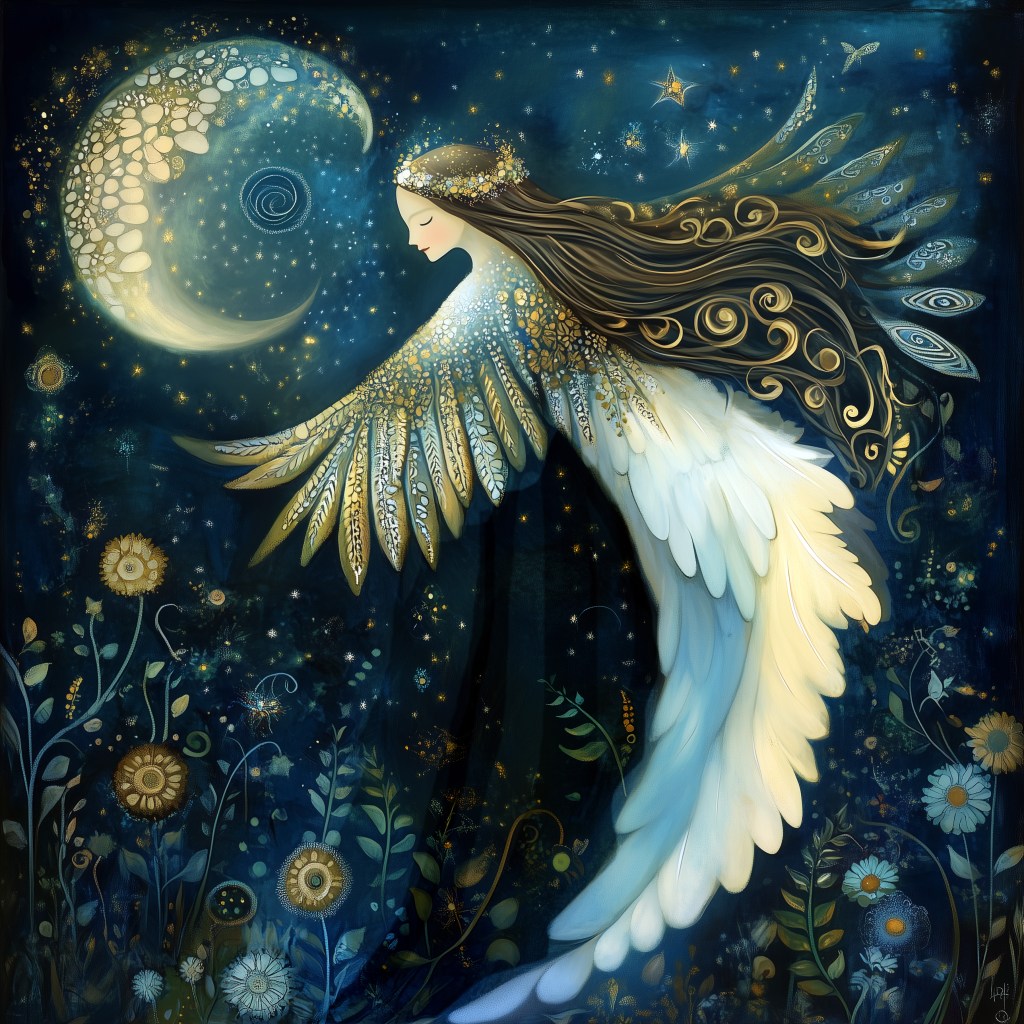
You are the dream you yourself are dreaming. This is a thought that came to mind during my meditation this morning. I jotted it down in my notebook along with several other, related thoughts, including: your grip on reality is so tight when you are always wanting, always grasping, always chasing, always performing, that you forget you are both the dreamer and the dream. It is as if the dreamer becomes consumed by the dream and is unable to wake up.
All this, of course, is a metaphor: life as dream. “Row, row, row your boat…” It is a metaphor about illusions, attachments, and suffering. What I think it means in practical terms: every element of perceptible reality, animate and inanimate, has the potential to be an analog for what is happening inside of us. To each and every encounter we bring a reservoir of experiences, of memory, of conditioning, values, beliefs, and emotions, conscious and unconscious, that inform our judgments and our responses. These things can be automatic, like projections, and feel real—objectively real—when they are not. Those that are automatic and which operate beneath the veil of awareness are the most insidious—and often the most powerful and convincing—and comprise what Jung calls “the shadow.” They are what prevent the dreamer from waking up.
As a result, we often conflate what is happening within us with what is happening outside of us. Subjective, often unconscious, reality is superimposed on perceptible reality, and what’s happening “out there” becomes the cause of our suffering. The dreamer becomes consumed by the dream and forgets that, more often than not, it is not the external world that causes suffering, but our relationship to it, which is characterized by illusions. Those illusions and our attachment to them cause suffering. Shattering those illusions can cause even greater suffering, but as far as I know, it is the surest path to freedom (though not for the faint of heart).
Indeed, we see in front of us everything we think we lack. Everything that causes us pain, anger, or contempt. In addition to everything we think will bring us happiness, contentment, or inner peace. But these things are as mirages in a desert or images in a dream. As our dreams speak to us analogically, so, too, does the unconscious filter our waking perceptions.
This is also the reason creativity is so important. Storytelling, too. When we destroy old forms and create new ones, we change our relationship with the world. Little by little, we forge new ways of being. We uncover new ways of seeing. We shift our inner reality, and we reorient ourselves to perceptible reality. The more we dedicate ourselves to the pursuit of destroying old forms and creating new ones, the more we realize that there seem to exist within us infinite possibilities for being.
I’ll close with another line I wrote in my notebook this morning: you should desire nothing more than to float upon the river in a restful slumber. This is, perhaps, one way of envisioning the archetype of the Self: as boundless dreamer. Untethered, unmoored. Not desiring, not grasping, not chasing. But adrift on a sea of eternal being.
 The Used Life