I take pleasure in my transformations. I look quiet and consistent, but few know how many women there are in me. – Anaïs Nin
I really need to write a new introduction to self-fashioning. The initial introduction, written just over a year ago, is outdated. And I think I owe it to myself, to my ideas, and to you, as a reader, to create something like a comprehensive re-introduction, which reflects the work I’ve done over the past year.
That said, here is a brief re-introduction:
Self-fashioning is a form of creative myth-making that is designed to help women relate to, or integrate, the feminine archetypes. To use Joseph Campbell’s words, it is about “shattering and reintegrating the fixed, already known” and giving it new form, new life, in the here and now. Through the use of narrative and image, self-fashioning encourages women to use their creativity to re-envision the feminine archetypes in a way that is personally meaningful and that gives structure to their experience. Please note that this is an exercise I came up with on my own for my own personal use. I am not an expert. I am just a woman who feels that women should have their own origin story, their own symbols, and their own model for understanding themselves because I believe the traditional Jungian model, based on the hero’s journey, is inadequate.
That is, I think we deserve the Goddess—not for the purposes of worship, but for the purposes of understanding how we’re made—so, I reinvented her. The idea of the total goddess as psychological construct is at the core of self-fashioning.
In mythology, the total goddess is both eternal muse and architect for the “poetic realization of the self” (Cambpell’s words). Her most creative act as Great Mother, or mother of the spheres, is to take the naked energy of the eternal sphere and clothe it in the forms of this world (hence the term, “self-fashioning”). She is not only the generative force from which the archetypes manifest in the field of time and space, but she is also the Self, or the whole which contains them all. As an embodiment of the cycles of life-death-rebirth, she teaches us that the path to integration for women should be poetic, dynamic, and rooted in wholeness, not hierarchies. That is to say that one feminine archetype does not have primacy over the others, but individuation comes from realizing the eternal energies embodied by every woman in unique combination. To my mind, this dynamic is best represented pictorially as the seed of life (as opposed to the mandala used in Jung’s model), as well as summed up in the metaphor: the self is the seed that germinates all others.

The Self, or individuated woman, to my mind, is a whole that is indistinguishable from her parts. She is not the virgin mother, nor is she the witch or the queen or the wise woman. The Whole Woman, as I like to call her, is found in the interstices. She is each of these in dynamic relation to the others. And her realization can, and should, be unique to every individual. The inherent creativity of the feminine, as well as the uniqueness of every woman and the goddess’s prerogative to continually reinvent herself or to simultaneously occupy a variety of forms (think: Tara from the Buddhist pantheon) are central to the idea of self-fashioning.
That said, I’ve created a number of self-fashioning narratives over the past year, but I have yet to discuss the attributes of the Whole Woman, or Self. That’s what I plan to do for the remainder of this post. And while the narrative that follows is, of course, a personal narrative based on my own inner experience, I do believe that some of what I have to say is probably universal.
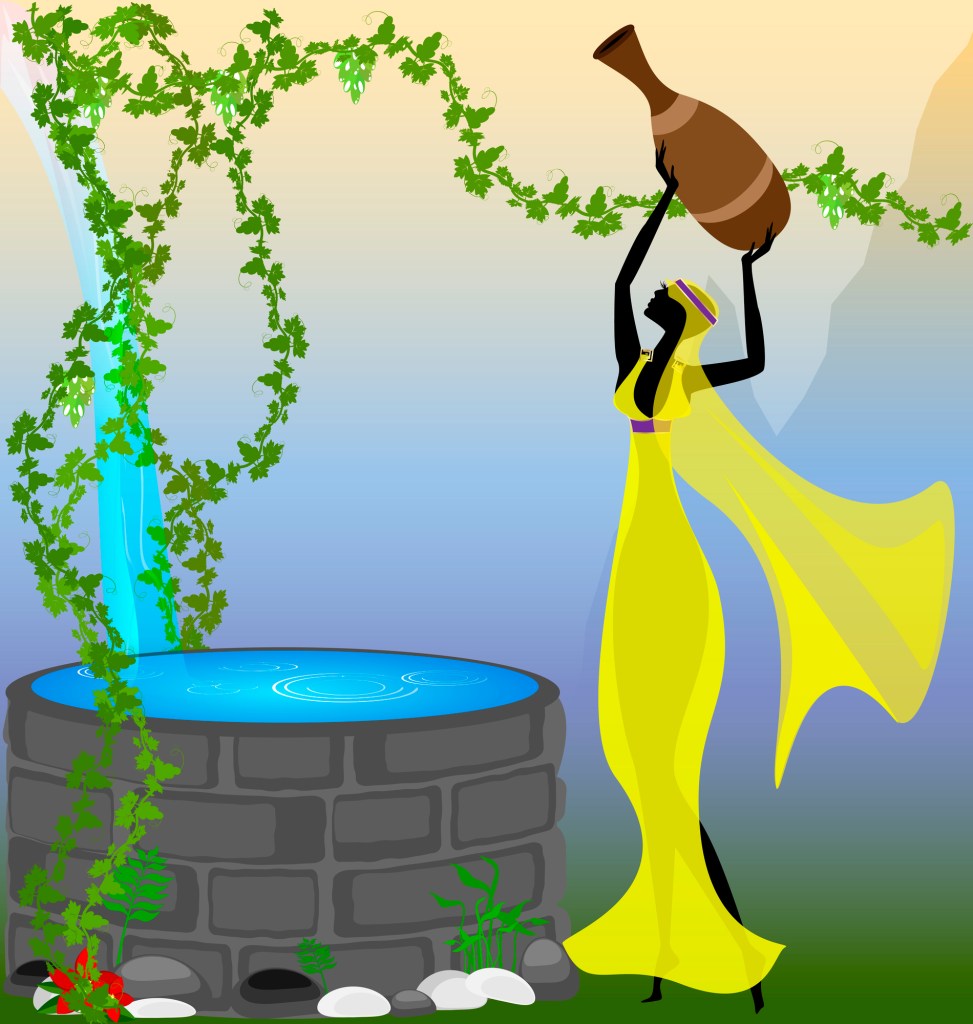
The Whole Woman is characterized first and foremost by a lack of naivete. She isn’t idealistic or unrealistically optimistic about the world or about the people she meets. She likes people, but she isn’t overly trusting, and she is very selective about who she allows into her life. She is a positivist in that she believes human nature has tremendous potential, but she understands that the likelihood of it being realized isn’t great.
The Whole Woman is adept at reading people and situations. She trusts her intuition, and when her gut tells her to stay away from someone or something, she generally listens. She also allows her intuition to lead her down paths even she doesn’t understand. And when her intuition tells her she is right about something—and I mean, really right—like the whole concept behind self-fashioning, she will defend her ideas with every ounce of strength she can muster. Because she knows she’s right. She can feel it in her bones.
The Whole Woman has learned not to expect more from others than they are capable of giving, for better or worse. This lesson was an especially painful one to learn, but she knows the most important lessons usually are. She has come face-to-face with her mistakes. She has judged herself and others (sometimes too harshly) and has learned how to forgive…and most importantly, how to move on.
When something is important to her, she doesn’t quit. She knows how to sustain herself; that is, she is capable of being her own source of strength and motivation. She is not particularly concerned with trends and is not easily distracted by what other people are thinking or doing (and she wishes more people felt the same way).
The Whole Woman is insatiably curious, has a great many interests and passions, and is capable of being quite caring, but she is not easily impressed. And she has boundaries, the non-negotiable kind. The Whole Woman also exhibits self-control. She has learned not to get carried away by her emotions, and she uses the pause between stimulus and response to choose her words and actions wisely.
But most importantly, the Whole Woman is capable of being many women in good measure and without getting too swept up or stuck in any of the roles she plays. She can be tender, loving, and vulnerable, brash and assertive, a bit wild, playful, and childlike. She has no problem articulating her thoughts and feelings and is sometimes so blunt as to be considered impolite. She doesn’t have an overly “soft” personality. And she’s not good at being fake, so she doesn’t even try.
The Whole Woman is sustained by goodness, and if she can’t find goodness in the world around her, she makes it herself. This is extremely important. She knows the value of doing a little bit of good everyday, like feeding the birds. This is what keeps her heart open. It’s what keeps her caring and compassionate and hopeful. It’s also a big part of what keeps her from isolating. To be sure, if there’s one thing the Whole Woman in me acknowledges and has consciously had to work on over the years, it’s that. I think a lot of highly sensitive people, especially, can understand what it feels like to want to shrink away from a world that often feels overwhelmingly chaotic and cruel.¹
But the Whole Woman knows that’s no way to live. It’s vital to maintain equilibrium, to stay open, grounded, and to have heart. Little acts of goodness are her source of courage. They are her antidotes to apathy, egotism, and hopelessness. And she thinks everyone should do something each day that is their “little bit of good” in the world.
¹ An important part of these narratives for me is acknowledging things I am working on within myself or those behaviors (either past or present) that I attribute to the shadow side of a particular archetype. I think it helps me maintain a healthy perspective and promotes healing and integration, rather than just celebrating certain aspects of the feminine.
Here are some more self-fashioning narratives:


 The Used Life
Leave a comment