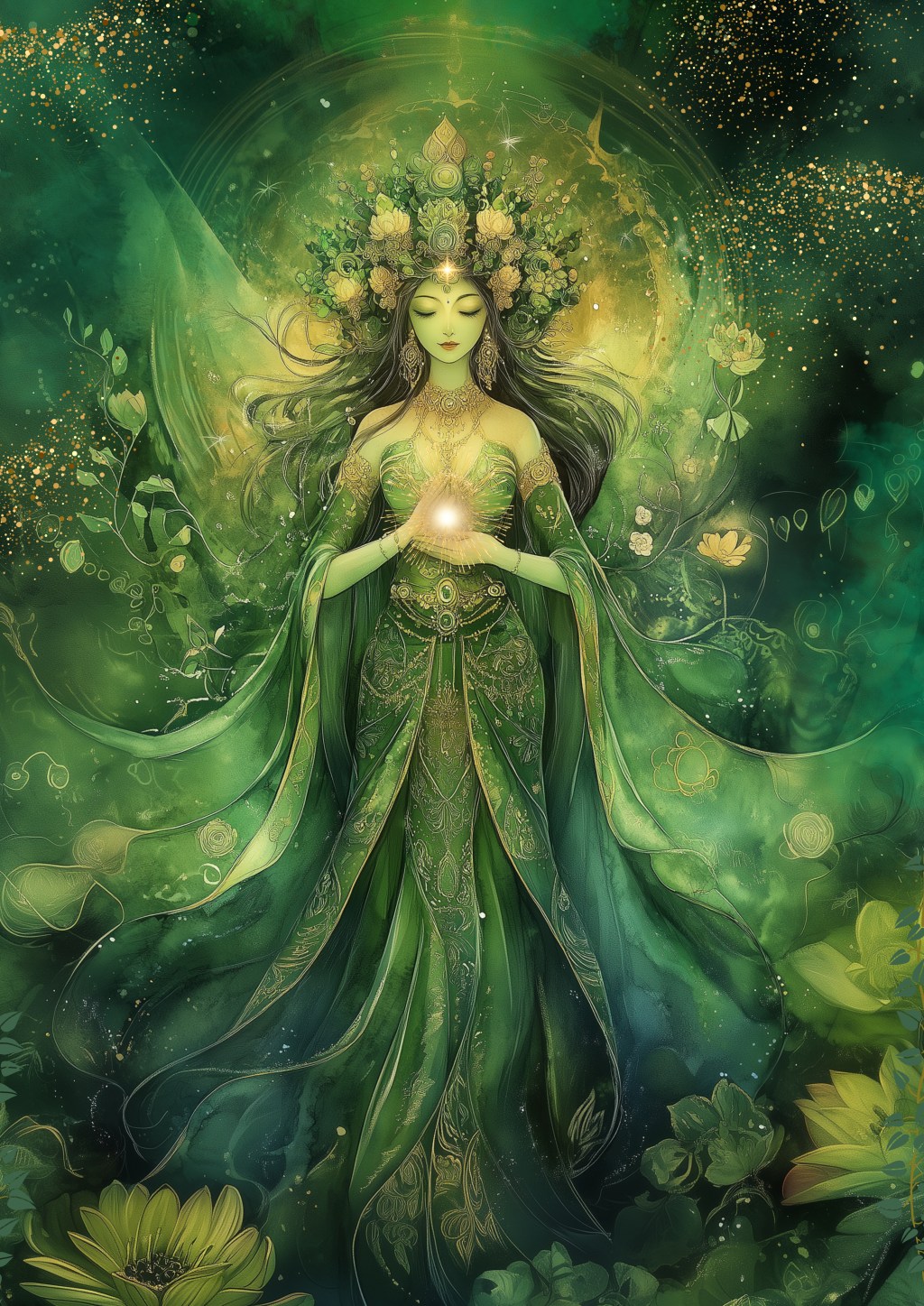
Artwork by Willow from Thelostcauldron
Since I resumed this self-fashioning project in January, I feel as if I have been working at a break-neck pace. It’s been incredibly rewarding to see this project finally come together, to see the blocks I had experienced when I began this project suddenly and rather inexplicably removed. I am grateful. Self-fashioning, as a method for relating to the feminine archetypes, means a great deal to me. It feels like my soul’s work, and it fills me with a great sense of purpose.
That said, as the one who has created self-fashioning, I feel it is incumbent on me to do more than just write personal narratives about the feminine archetypes. I feel it is incumbent on me to gain insight into the nature of the feminine psyche, to apprehend something of the logic of it, and be able to articulate how self-fashioning fits in with Jungian psychology, particularly the process of individuation.
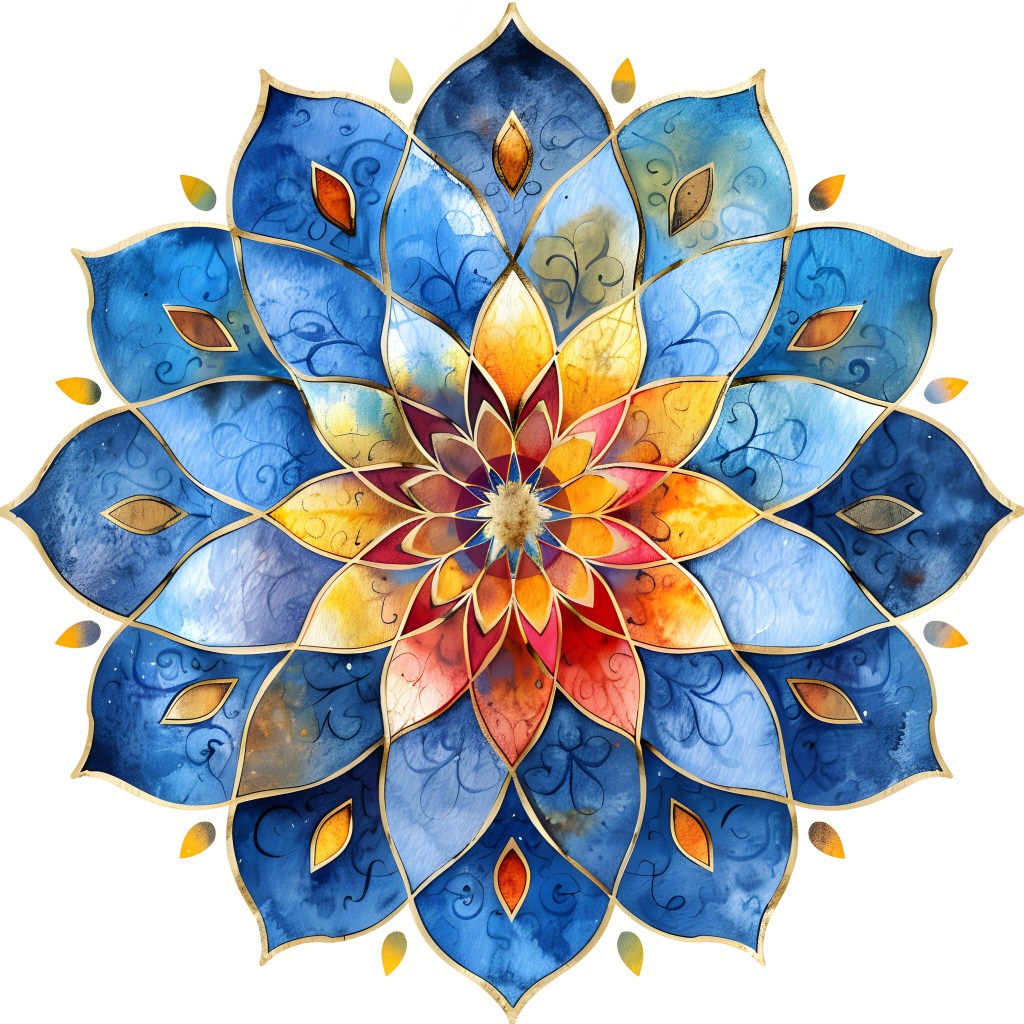
This, as you might imagine, has been a challenging—albeit enjoyable—task. The biggest obstacles, for me, have been (a.) my lack of experience with mythology and (b.) getting my ideas to fit in squarely with Jung’s model of individuation. For Jung, the process of individuation (of discovering the higher Self) relies heavily on the monomyth, or the hero’s journey (Jospeh Campbell’s The Hero with a Thousand Faces is a go-to resource on the subject). Pictorially, he suggests it looks like a mandala, with the journey itself being one of circumambulation, around and around until one reaches the Self at the center (though he also suggests the Self is the outside, which contains all).
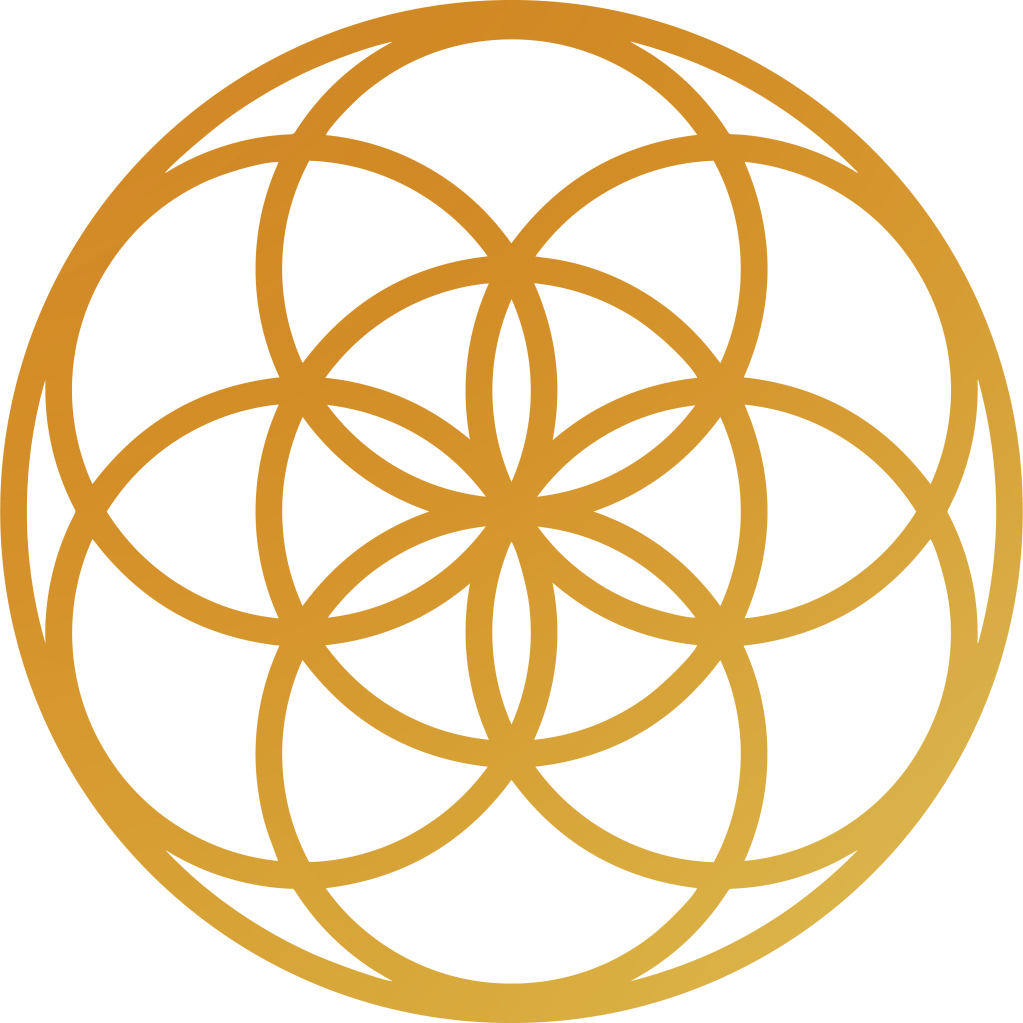
I don’t think that works for the feminine psyche. To be clear, I am speaking specifically of the feminine archetypes here—the wise woman, maiden, mystic, wild woman, divine mother, etc. I don’t think the logic is the same. I don’t think the process of integration is the same (I don’t think there is a “heroine’s journey”). I don’t think the nature of the Self, as an archetype, is the same. I mentioned briefly in a previous post that self-fashioning assumes the Self (which I am calling the “Whole Woman”) is fashioned through the integration of the feminine archetypes and that it is inseparable from them, a relationship best represented pictorially through the seed of life, a form of sacred geometry which is often associated with the feminine divine and/or the cycles of creation. When I wrote that post, I felt intuitively I was on the right track, but I knew the idea needed more work.
And this morning, as I was researching the goddess, Tara, a powerful feminine force in the Buddhist pantheon, I discovered what I had been missing. There is not one Tara. There are 21. The image at the top of this post is Green Tara (also pictured at the center of the image below). Her other manifestations are associated with different colors, each representing different energies and attributes.
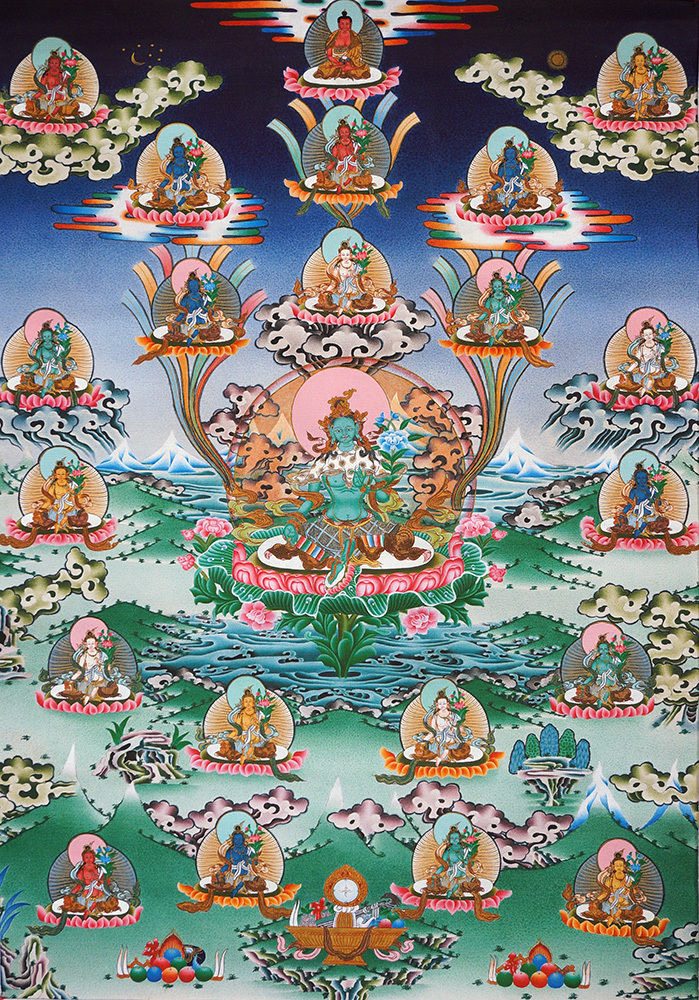
As I was studying these images, a phrase came to mind: “the seed that germinates all others.” Followed quickly by, “The Self is the seed that germinates all others.”
“That’s it!” I said to myself. “Finally!”
The Self is the seed that germinates all others. That is the nature of the feminine psyche, the essence of the feminine Self. That is the logic behind the feminine archetypes. The path to integration for a woman is not a journey toward the center. It is not a point to be arrived at. A woman’s journey is a journey of expansion, of wholeness. The feminine Self is the creator of the feminine archetypes. She is the divine maker, the original source. She is also inseparable from the feminine archetypes, as the overlapping circles in the seed of life. Her essence is one of transformation—of divine play—and the feminine archetypes, in all their manifestations, are how she adorns herself, how she “fashions” herself, how she is in the world. The 21 Taras are a perfect example.
The Self is the seed that germinates all others. The Whole Woman is indistinguishable from her parts. She is both cause and creator. She is the world.


 The Used Life
Leave a reply to Architecture of Mind – The Used Life Cancel reply