Several of the self-fashioning narratives I’ve written over the past few months have been in response to life events. Nothing major—just some challenges and challenging emotions that needed to be dealt with as a result. Indeed, for me, these narratives have become more than just a method of relating to the feminine archetypes: they’ve become a way to use negative emotions constructively, to turn them into something positive and creative. And it works. It works quite well, actually.
It occurred to me yesterday after I published The Spiritual Healer that it might be worthwhile to tell you how I create these narratives. Perhaps someone reading this will find themselves in need of an exercise like this one day. And it will work for them like it works for me.
If that’s the case, I hope this post finds you when you need it.
Here’s how I create self-fashioning narratives:
- I identify my feelings. I either sit in meditation or quietly with my eyes closed for a few minutes to identify what I’m feeling as clearly as I am able.
- I then ask myself what I need. In other words, what will help me deal with these emotions? Do I need to feel powerful, confident, and capable? Do I need nurturing and self-care, calm and reassurance? Are creativity and playfulness the answer? Or should I go outside and observe and appreciate nature? Perhaps I need to indulge my love of beauty and warm, welcoming spaces and spend time tending to my home or making a beautiful meal. Invariably, one solution comes to the fore—and it’s usually pretty quick.
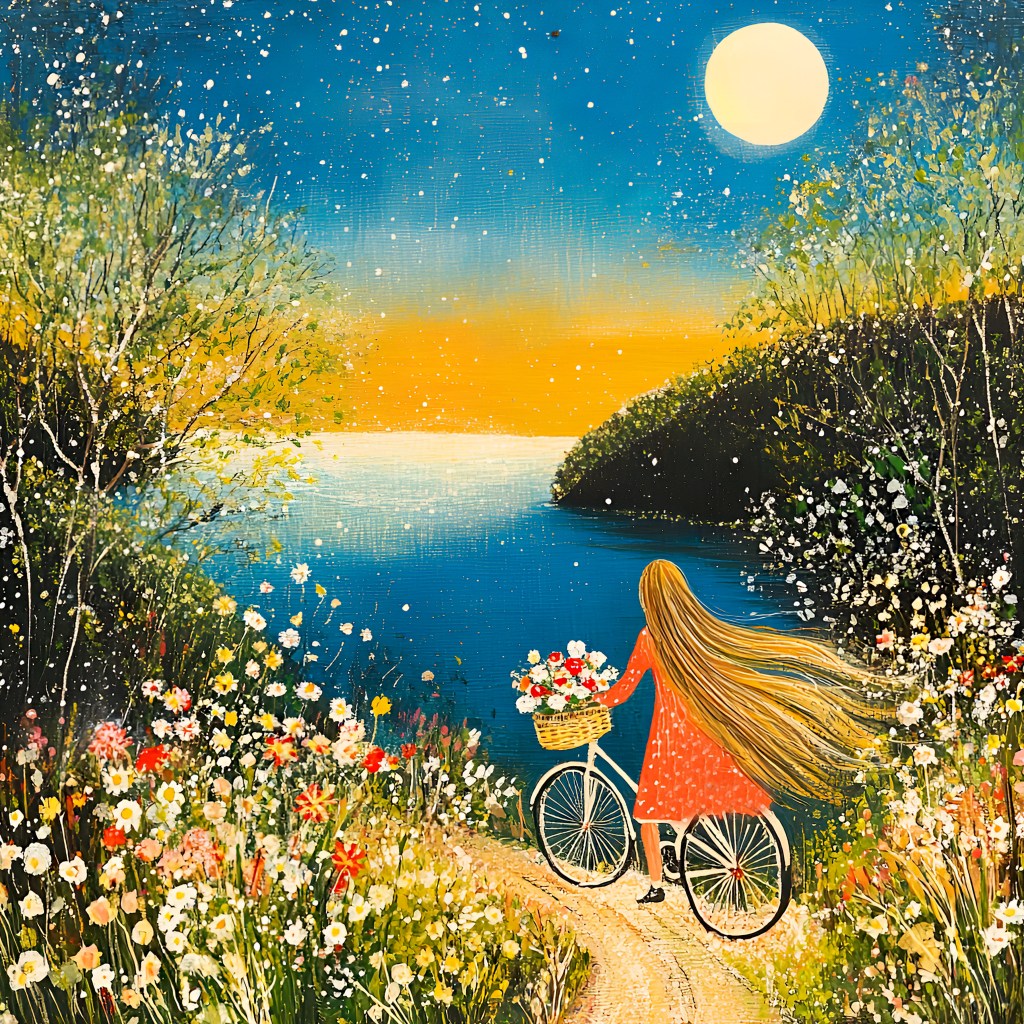
- I then search for an image that fits my solution. This is my favorite part of the whole exercise. If what I need is to feel powerful, confident, and capable, I search for images of the feminine that correspond with that feeling. If I need healing in nature, I might look for an image that illustrates the woman-nature connection. When I find the right one, I know it instinctively. It is worth noting here that I do sometimes identify with goddess art from different traditions. The image I used in The Dragonslayer, for example, is Hecate, Greek goddess of witchcraft. But when I use that kind of imagery, I always rename the goddess. Always. There is a reason for this—and I think it’s one of the primary reasons why self-fashioning works (more on that below).
- I ask myself who this woman is—this is the imaginative part. What is she like? Or, if it’s a feeling I am describing—like feeling sexy or pretty—I try to really sink into that feeling. I look at the image and ask myself questions like:
- What is she doing, or what is she thinking?
- What would she do in this situation?
- What would she tell me if she could?
- What is her presence like? Is she warm and nurturing? Soft and sensual? Bold and assertive?
- And what does it mean to me to embody these characteristics? That is, what does it look like for me to be bold, sensual, warm, or nurturing?
- I write it out. Each narrative contains two parts, broadly speaking. The first is a creative description of the entity, including her name, if applicable. The second is what she means to me—what she teaches me, how she helps me, or why a particular feeling or way of being is so important to me. This is also a good place to address any pain associated with the feminine. For example, in the course of your writing, you might find yourself saying something like, “I’ve never felt pretty.” This is where you call on the entity you’ve created to help you with these feelings. You might say something like, “I’ve never felt pretty because of my body type, but [Entity Name] reminds me that real beauty doesn’t conform to rigid or unrealistic standards. She reminds me that I am beautiful, and I deserve to treat myself that way—to do things that make me feel beautiful inside and out and to radiate my own confident, sensual, feminine energy in the world. Because that energy is divine.”
6. I put it all together and admire what I’ve created.
Don’t skip the last step. This is where you acknowledge what you’ve made: this goddess isn’t just some character from mythology, folklore, or fairytale. She is yours. From her name, to what she looks like, to her personality, and the role she plays in your life—she is uniquely yours and uniquely you. That feeling is its own reward—and it’s a reward you can’t get simply from meditating on or summoning the energies of the total goddess.
You’ve just taken your pain, your anxiety, and your uncertainty and transformed it into something beautiful. It’s a kind of alchemy. Acknowledge that you’ve given form to something beautiful and powerful and divine that exists inside of you. Sit back and admire it. Feel proud of it. That narrative is now yours to hold onto, to remind you who you are whenever you need it.
Here are some of my self-fashioning narratives:


 The Used Life
Leave a reply to thechristiantechnerd Cancel reply