I think if you have ability and talent in one way, you have it in all ways. I’m not a jack of all trades; I’m a master of many. I don’t feel there is anything I can’t do if I want to. – Evel Knievel
Although I didn’t quite know it at the time, starting The Used Life: Experiments in the Art of Mastering None in 2017 was a defining moment in my life because it was the moment in which I chose myself. It was the moment in which I finally decided to stop treating myself like I needed to be fixed. It was the moment in which I decided that having many talents and interests (which some call being a “multipotentialite” or having an “M-type” brain) was a facet of my personality that I needed to actively nurture and embrace rather than work against.
Creating this space was my way of giving myself the freedom to be what I am without self-censoring, without performing, and without making myself feel small in order to fit into some pre-existing paradigm. And up to that point, that’s exactly what I’d spent most of my life doing. Every job I’d ever had, every school I’d attended (with perhaps one exception) had made me feel defective. Why couldn’t I just specialize? Why couldn’t I just pick one thing I wanted to do everyday for the foreseeable future? Why couldn’t I just step into whichever role was assigned to me and be content with it? Not a chance.
Full disclosure: I make a bad student, not because I get bad grades (to the contrary, I’ve always done well in school), but because, in the course of my studies, I inevitably reach a point at which I want to step outside the box and do something different, something creative, something multi-disciplinary, something unconventional. And it’s been my experience that that kind of approach isn’t always or often well-tolerated. For much the same reason, I make a terrible employee. Abominable, really. I’m not wired to step into a niche role, to perform repetitive tasks, or to follow instructions without very much thinking. To me, that doesn’t feel like comfort or stability; it feels, I imagine, a bit like being suffocated.
The Used Life was a place where I could finally breathe. Where I could be self-directed and give myself permission to do and be whatever I wanted, in whatever combination, at any given time—and more importantly, where I could follow my inner voice whenever it directed me to the development of new talents and skills. And that’s made all the difference. When I finally chose myself, when I stepped into the role of master of none, my life started to change.
I don’t want to belabor the struggles of being a multipotentialite, or “master of none,” which is the term I prefer (and I’ll explain why in a moment). Those of us who are wired this way know those struggles too intimately, from not fitting in easily in social situations to feeling like we’ve somehow failed at the game of life in terms of success and achievement. I’ve spent most of my adult life moving from job to job that I hate, trying to find the “one thing” I was supposed to be doing with my life…or that I could, at the very least, tolerate for any length of time.
Indeed, at Christmas dinner many years ago, a half-drunk (or more) aunt looked at me sneeringly and said, “You used to have so much potential.” She was referring to my complete lack of professional success when compared to the honors and achivements I’d attained as a student. Those are the kinds of comments that reinforce feelings of inadequacy and failure in people who have tremendous potential and who want nothing more than to actualize it in a way that makes them feel competent and proud, but who just haven’t figured out how to do so yet.
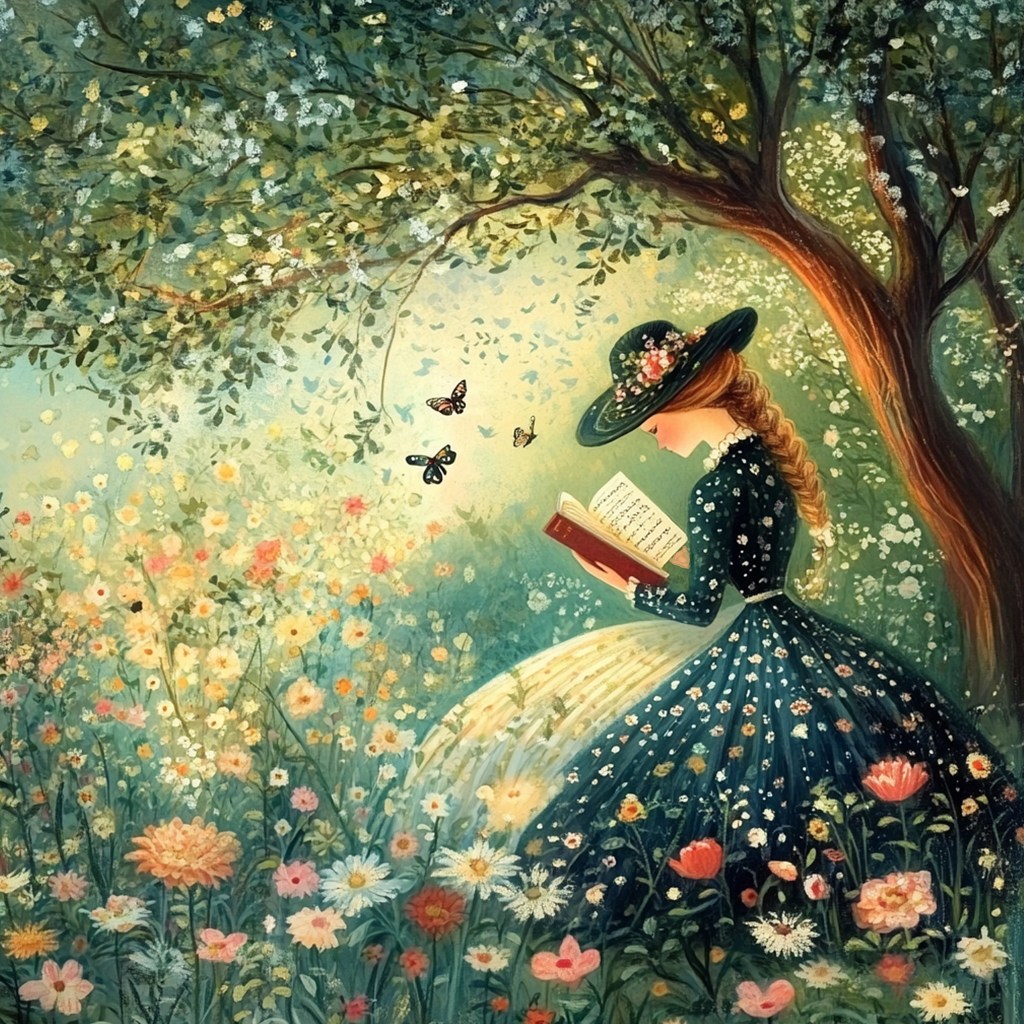
When I chose to step into the role of master of none, I freed myself from the fiction that there was only one thing I was supposed to do with my life. And I allowed myself instead to be all things in tandem: collage artist, poet, amateur photographer, bird nerd, home cook, fitness enthusiast, gardener, avid reader, lover of classic mysteries, and perpetual student of subjects like psychology, history, philosophy, art, and literature. I also find it is now easier to accept my job with a bit of grace, as my identity is no longer organized around a job title.
Indeed, if you were to ask me what I do for a living (quite possibly my least favorite question), the truest answer I could give would be, “I am a student of life.” My interests are many and varied, and each of them reveals to me something about the underlying patterns of the world in which we live. I am, above all, a student of those patterns. Like Evel Knievel, I don’t feel there is much I can’t do if I want to (except physics and calculus. These are impossibilities.).
I am insatiably curious, and for that reason I am never bored. There is always something new to learn, some new skill to acquire, something to create. I think my curiosity is the reason I love life as much as I do.
On most days, my greatest challenge is finding time for all of my pursuits and balancing them with other responsibilities. I am and always hope to be a master of none. That is, I view myself as a perpetual novice, as an artist who has never and will never quite master her art. I fear that seeing myself as a “master” would spoil all the fun. It might hamper my playfulness, curiosity, and enthusiasm, as taking oneself too seriously tends to do.
And lastly, the real benefit of being a master of none is that it’s a self-defined role (and subject to change at my liking). It means I can release the inner pressure to organize my identity around social roles, job titles, accomplishments, or the like. It means my value is not determined by these things, nor am I shrinking myself, or my estimation of myself, in proportion to them. It means I don’t need to perform in social situations in order to conform to others’ expectations or to garner their acceptance or approval. And it means I am free to be exactly what I am: a student of life. A woman who feels most alive when she is learning, creating, nurturing her talents, and applying them to whichever domain she chooses and working to whichever degree of mastery she chooses.


 The Used Life
Leave a comment