A thought came to mind this morning quite out of nowhere (and while I was doing laundry, of all things) that I think is worth sharing: the life I imagine, or that I think I want, and the life I actually want are rarely the same thing.
What I mean by that: everything in our environment—people, places, objects, scenarios—have representational, or symbolic, value. They are analogs for deeper psychological processes. Another way of saying it: the unconscious thinks in symbols and assigns analogical significance to all kinds of things in our environment without our conscious consent.
It’s a bit of trickery, actually. Because we aren’t consciously aware of the like-for-like substitution that’s taking place, we treat the symbolic literally. And we live out the figurative as if it were real. I’ll use an example from the bird world: some birders hate Blue Jays because Blue Jays can be opportunistic, boisterous, and aggressive at feeders. Brown-headed Cowbirds are perhaps an even better example: they lay their eggs in other birds’ nests, a behavior known as brood parasitism, which often results in the death of at least some of the host species’ offspring. Some birders go into an absolute emotional tailspin at the mention of a Brown-headed Cowbird.
My question to those people would be, “What is it that you hate?” Is it the bird or what the bird or the behavior represents to you? If you despise the creature instead of looking at what the creature represents, then you have lost the plot and the lesson contained therein. The bird, after all, is simply living in accord with its nature. I would be lying if I said I don’t feel a little bit sad whenever I see a sparrow feeding a much larger juvenile cowbird at my feeders instead of its own young, but that is the way of nature. And the cruelty of nature is something none of us will ever fully understand. What it isn’t is a reason for blind hatred or for taking action based on that hatred.
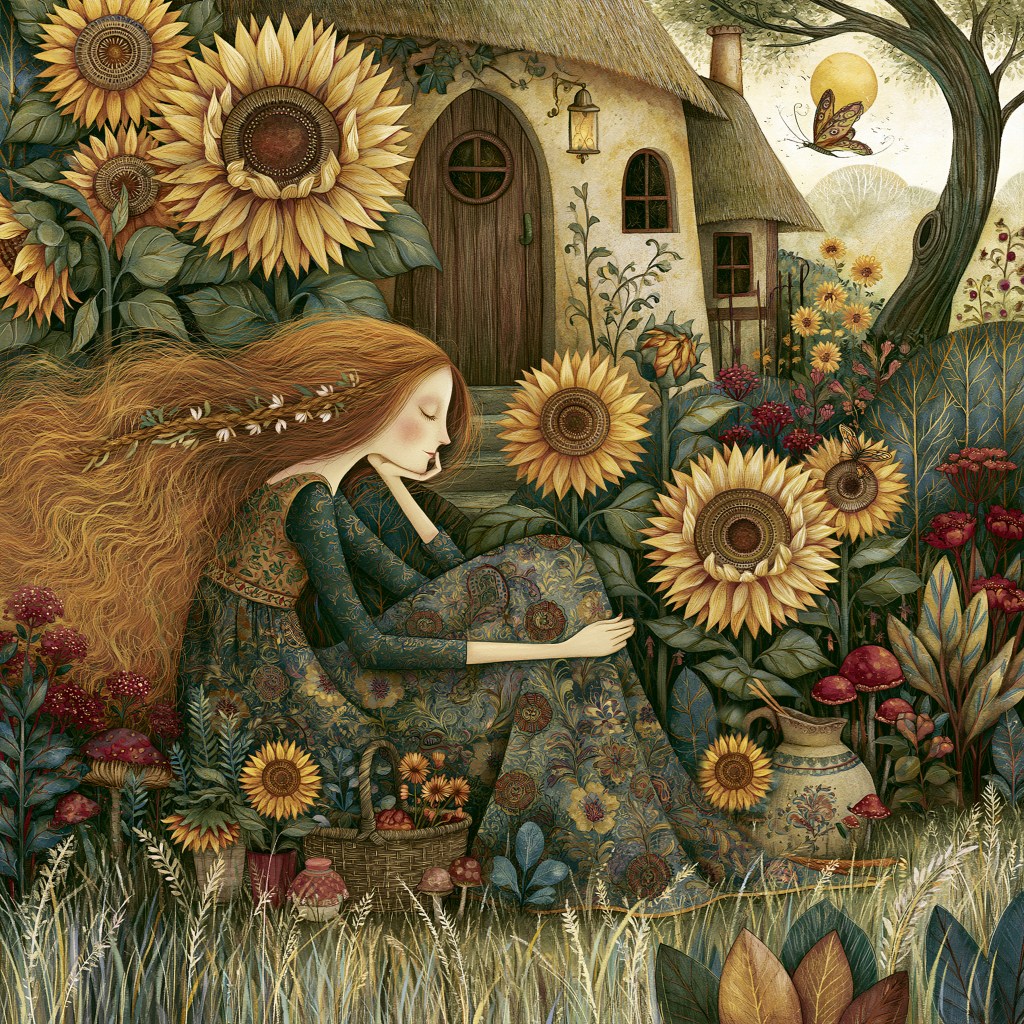
The same logic applies to people, places, objects, and scenarios that we desire—the components of the life that we imagine. We may have fantasies of living in a far-off place, for example, like the French countryside, and think, “If I lived there, I would be happy.” But would you be? Or does the image of such an idyllic place point to something else? Before you purchase that house, it might be worth thinking about…
Indeed, the first question I would ask myself is, “Is it the house I want, or do I want to experience life like I live in that country house?” Much in the way a simile shows us explicitly when one thing is “like” or “as” another, these mental images (and the often powerful emotions associated with them) give us insight into who we are and what we truly desire. Perhaps what I am looking for are feelings of comfort, safety, and rest. Maybe I yearn to live slowly, mindfully, to be gentler with myself and others, to have a stronger connection to nature. Maybe that country house represents a place where I can raise a family, where I can heal or strengthen my relationship with a spouse or partner, where I can live according to my own values, pursue long-forgotten interests and passions, where I can prioritize what really matters to me. In other words, what I want isn’t the house, but what the house represents.
This is yet another reason why the current literacy crisis is so alarming: the images to which our minds assign importance are the symbols of our lives. They’re a kind of moving, breathing poetry. And the stories our minds construct around these images are plots we need to learn to read analytically if we are to have a deeper understanding of ourselves and others.
I mentioned these statistics in a recent post, and for convenience’s sake, I’ll state them again: only 16% of Americans read for pleasure on any given day. Approximately 30% of American adults cannot make inferences or paraphrase ideas from a long-form text, and 54% of U.S. adults read below a 6th-grade level. If you cannot read, you are not only, in my opinion, the easiest person in the world to control, but you are also someone who cannot understand yourself.
Over the years, I have come to routinely examine the images that recur in my mind—and I try very hard not to take them too literally or too seriously (sometimes this is easier said than done). Those that point to the life I think I want, those I covet, those I fear, those I despise. All are analogs for an interior reality that is attempting to reveal itself. All are giving me information about who I am, what I want and need, what in my life needs to be healed and released, and the ways in which I need to empower, assert, and take greater responsibility for myself.
In my opening paragraph, I stated, “The life I imagine, or that I think I want, and the life I actually want are rarely the same thing.” What bridges the gap is our ability to read the text. I’ll return to my previous example of the idyllic French country house. If I can’t read the text—that is, if I am unable to separate the symbol from the inner reality to which it refers—then, I buy the house and move to the country (reminiscent of the Neil Gaiman quote, “Wherever you go, you take yourself with you.”). I live out the metaphor as if it were real. If I can read the text, I change myself.


 The Used Life
Leave a comment