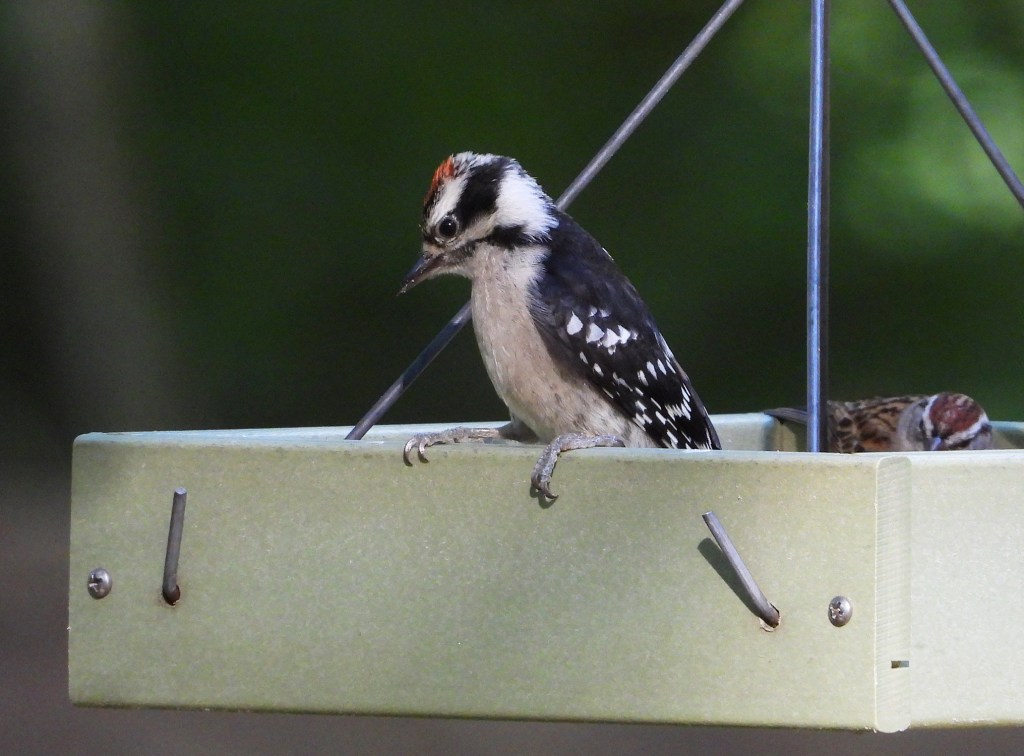
My bird feeders continue to be quite busy. There are lots of juveniles visiting the backyard–woodpeckers, espcially. Up until about a week ago, I was going through close to a pound of suet per day. It usually takes 3-4 days for the woodpeckers to eat that much.
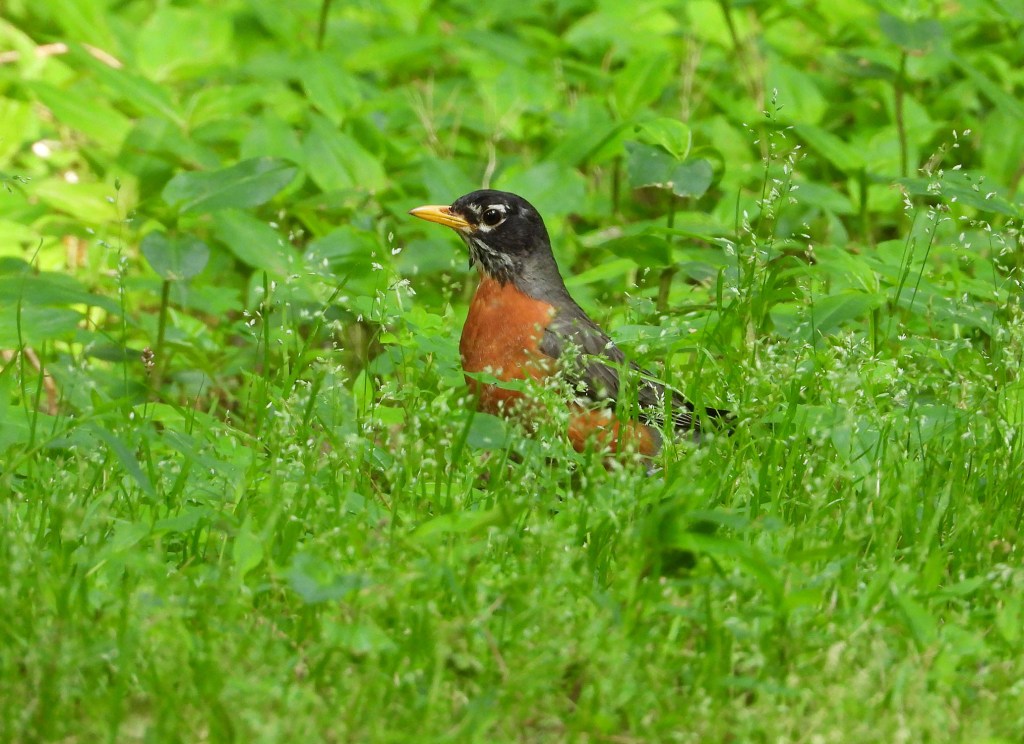
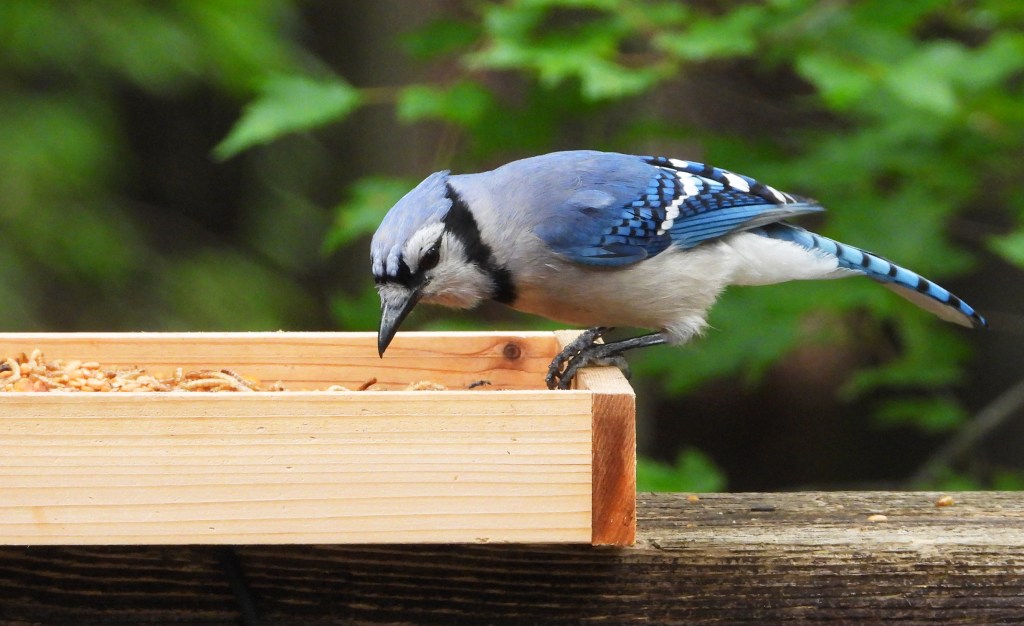
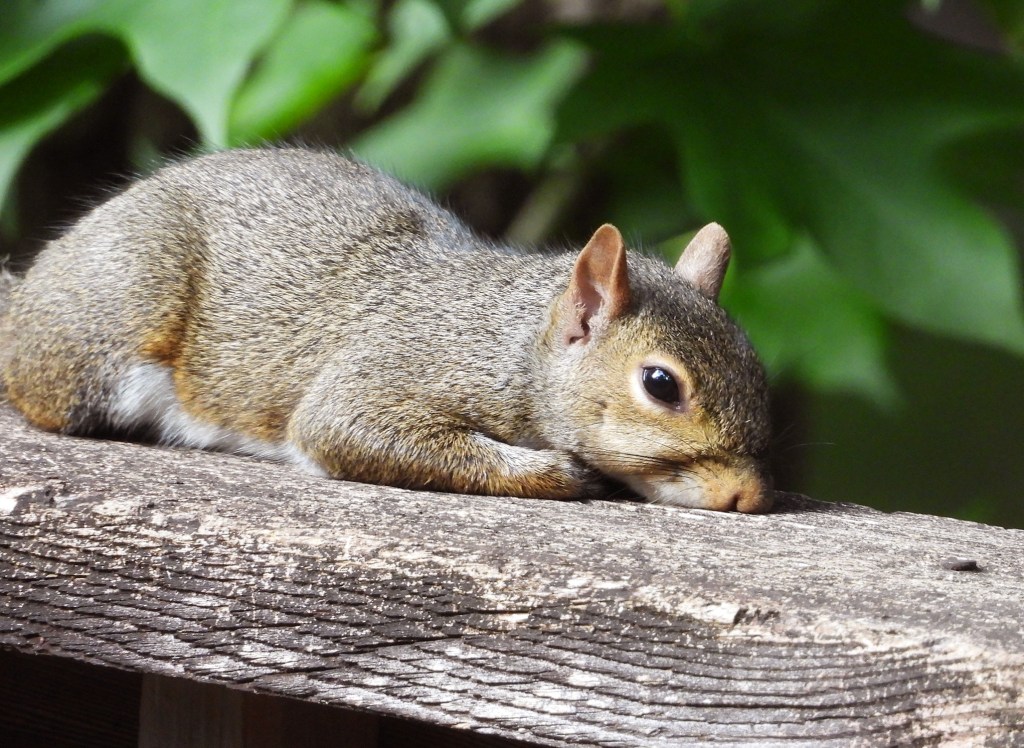
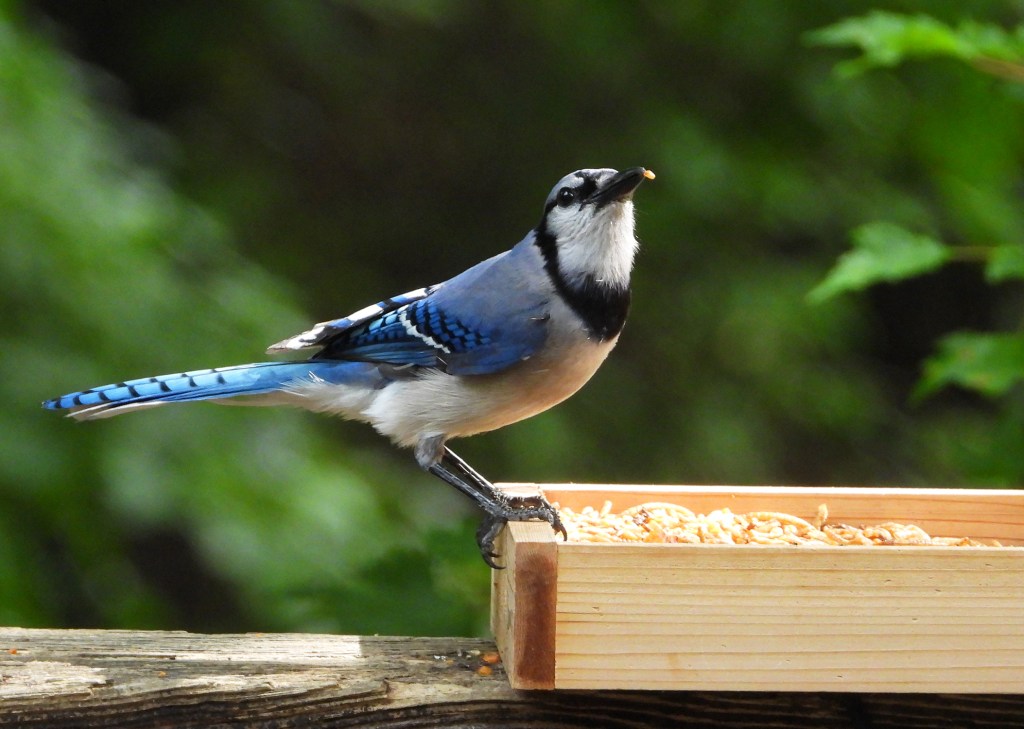
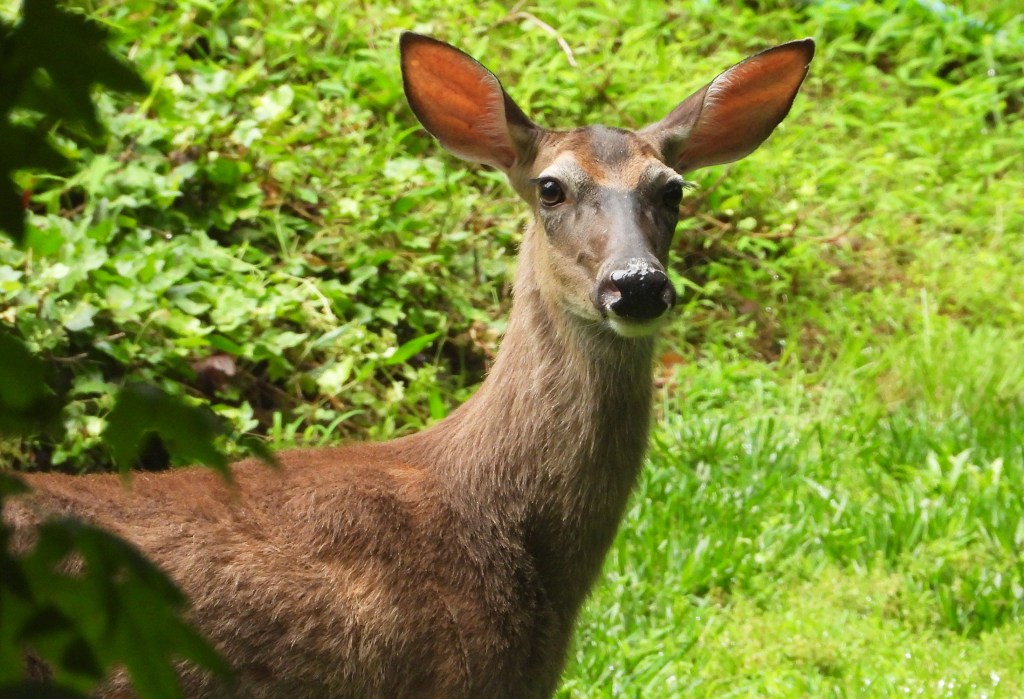
I’m also seeing lots and lots of Blue Jay activity. Robins, too, which is a bit of change from previous years. Deer, foxes, and squirrels are all visiting the backyard regularly right now, too, and it’s all I can do to keep the deer and squirrels out of my flower beds.
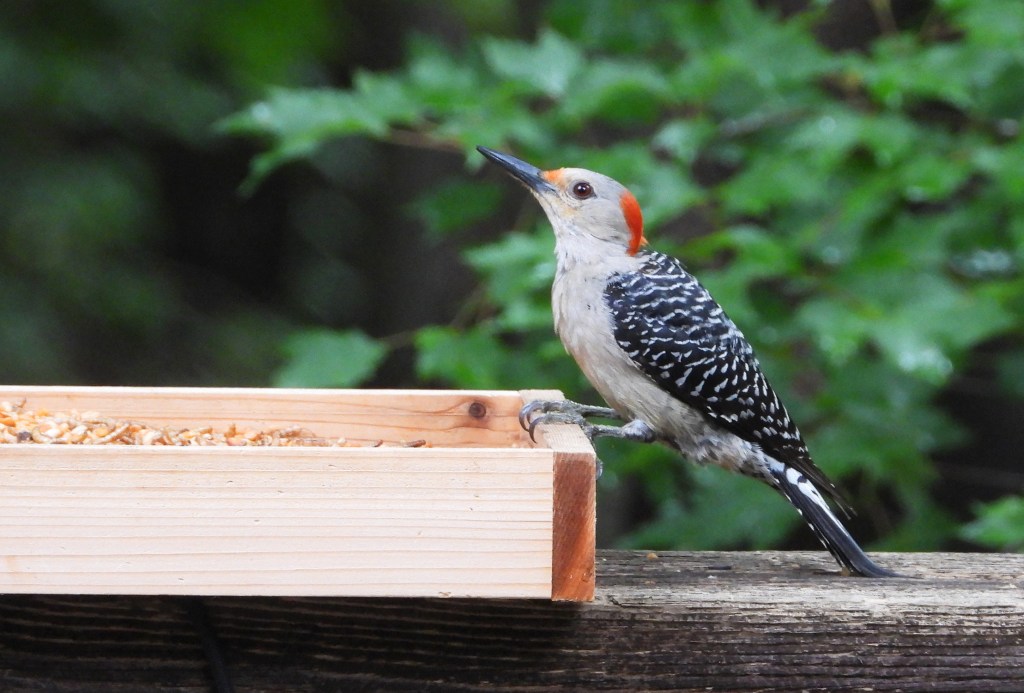
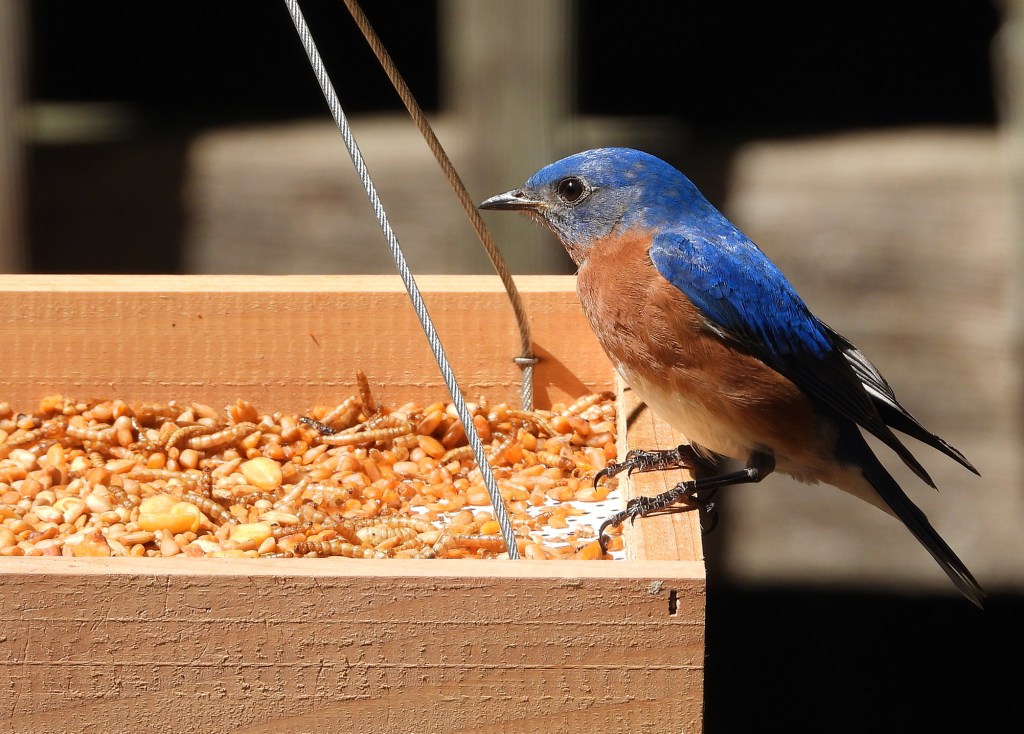
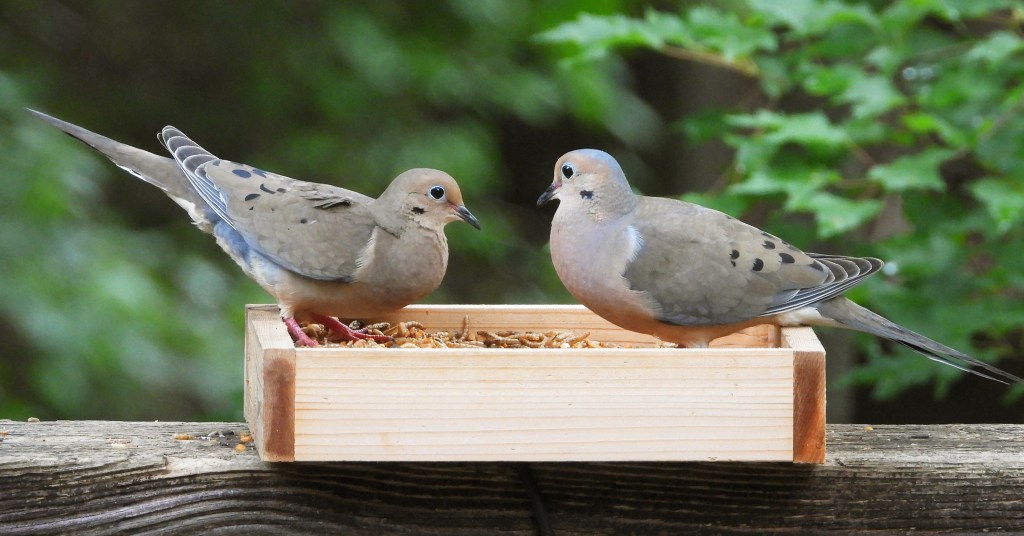
That said, as soon as I hit “publish” on this post, I am going out to clean my bird feeders and baths. This post will be the last to include photographs of the natural wood tray feeder that has been sitting on my deck since the wintertime (photo below). I am retiring that feeder for the summer months because frequent rain showers and high humidity have made it too difficult for me to keep it clean.
Because it was such a popular feeding spot, I will probably put that feeder back out sometime in the fall…once it no longer feels like we’re living in a rainforest. I hope you enjoy these photographs.
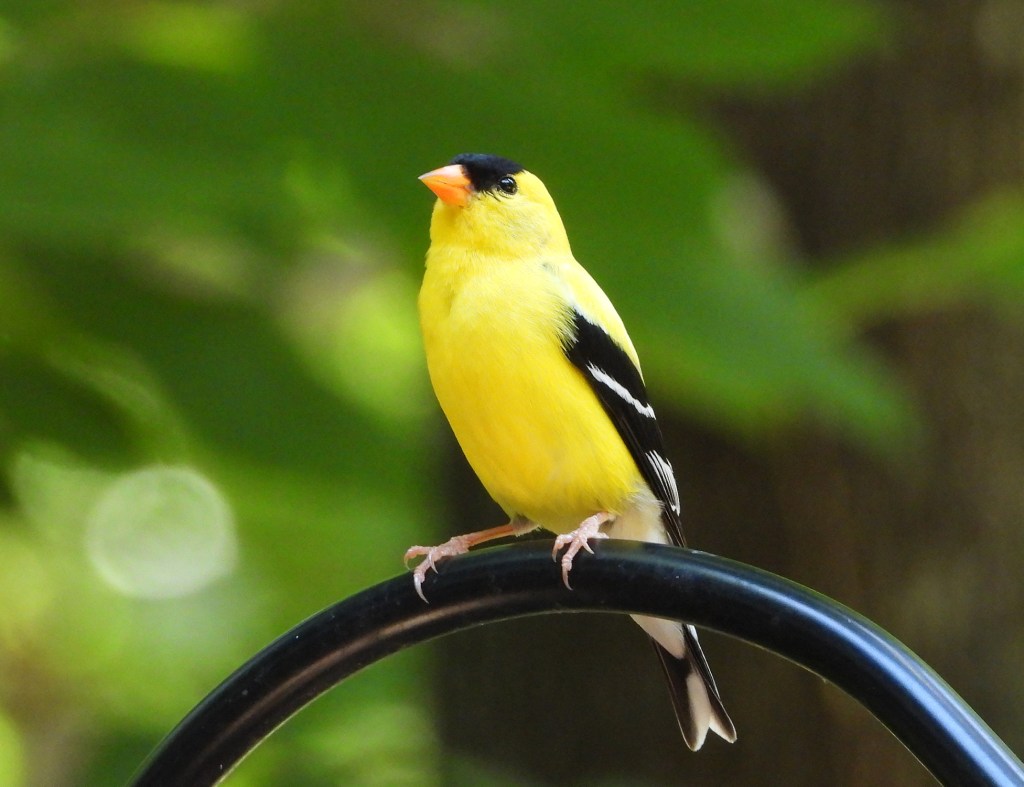
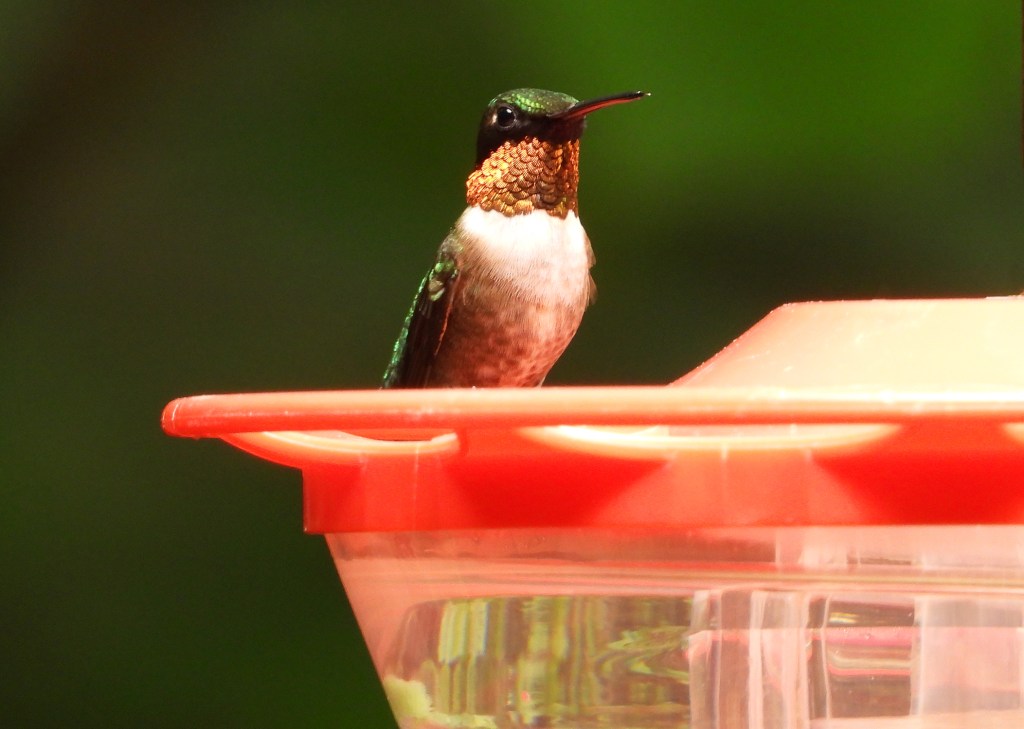
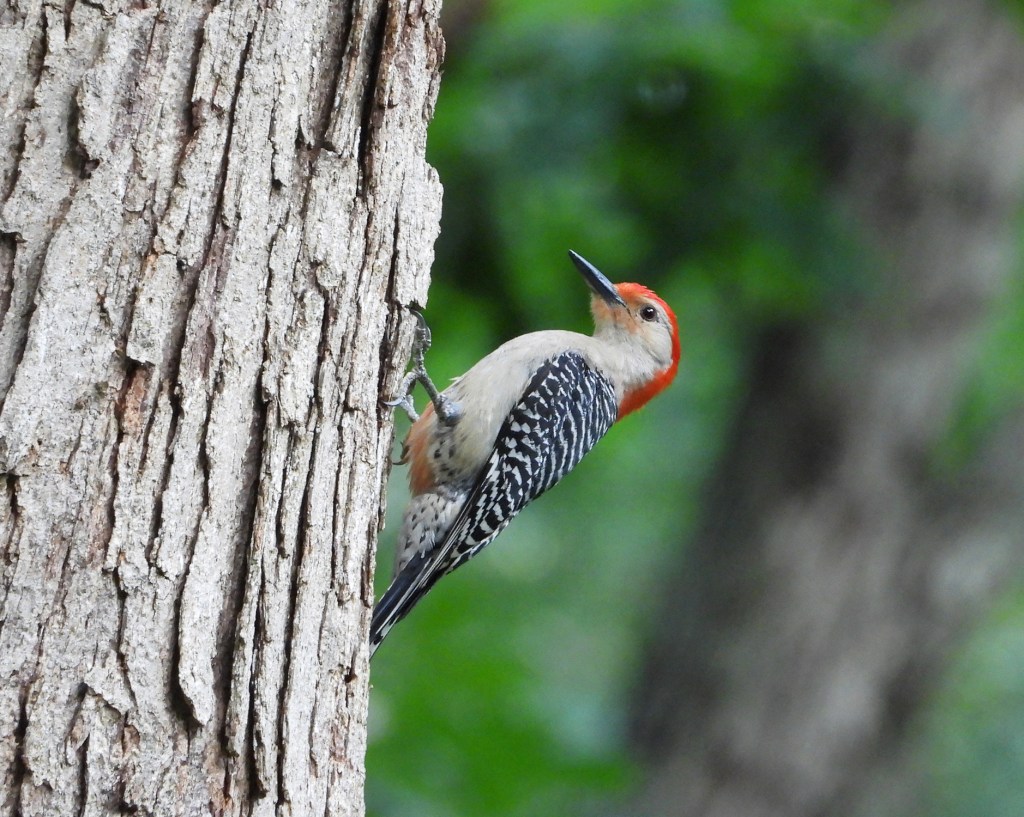
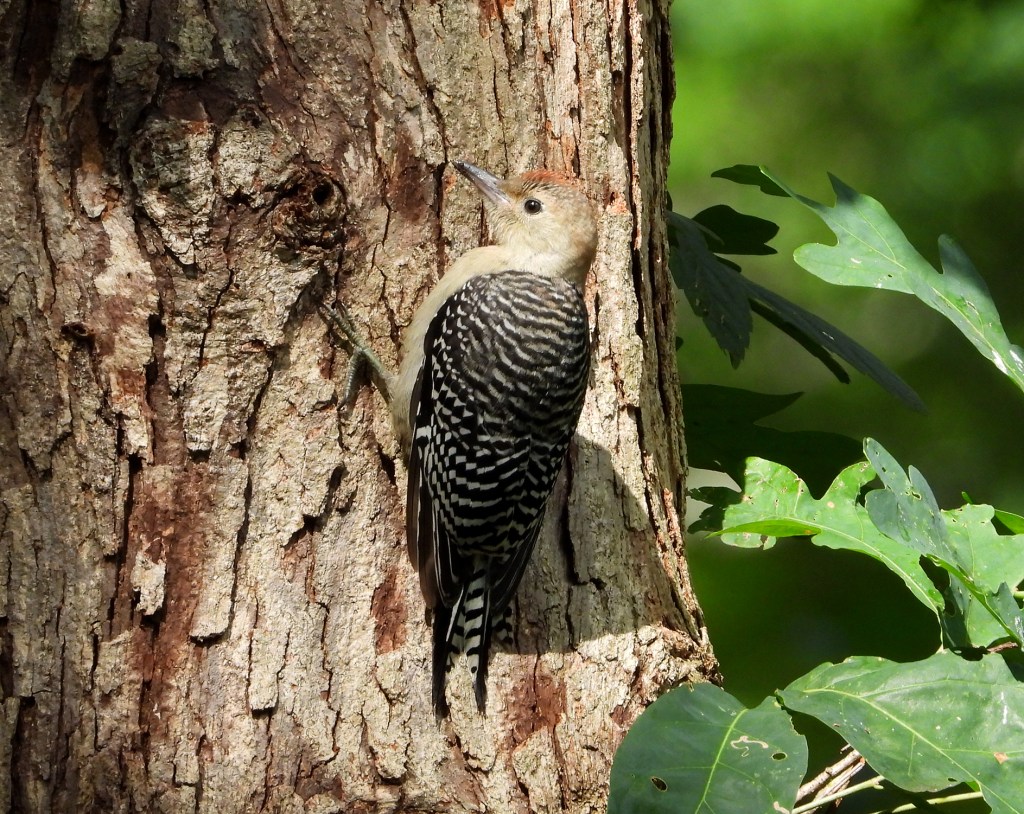
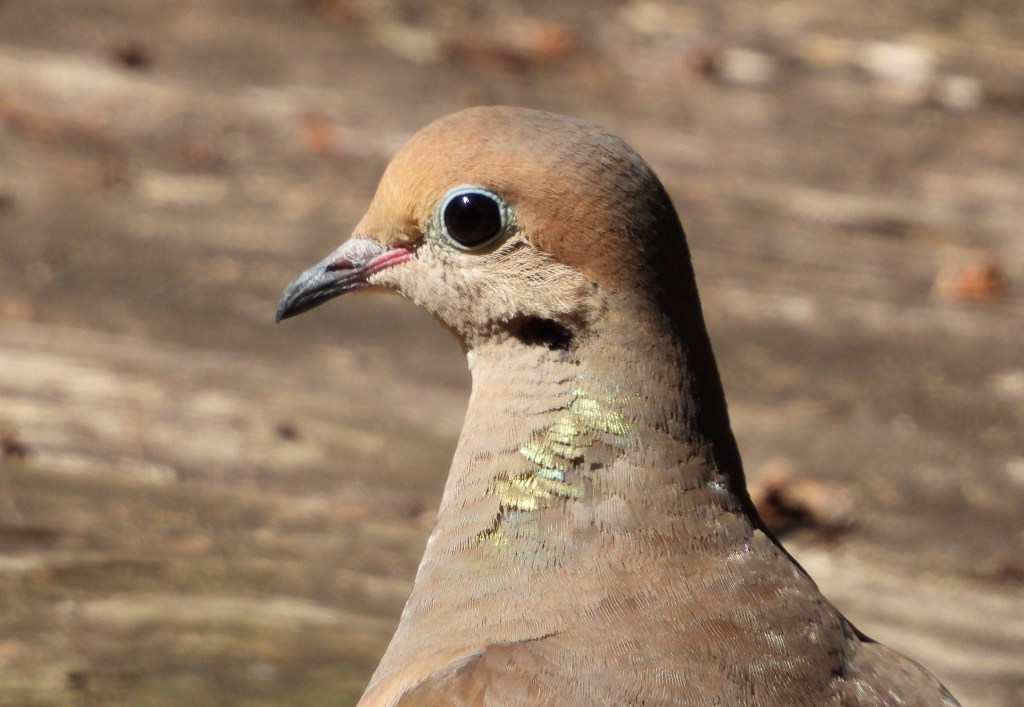
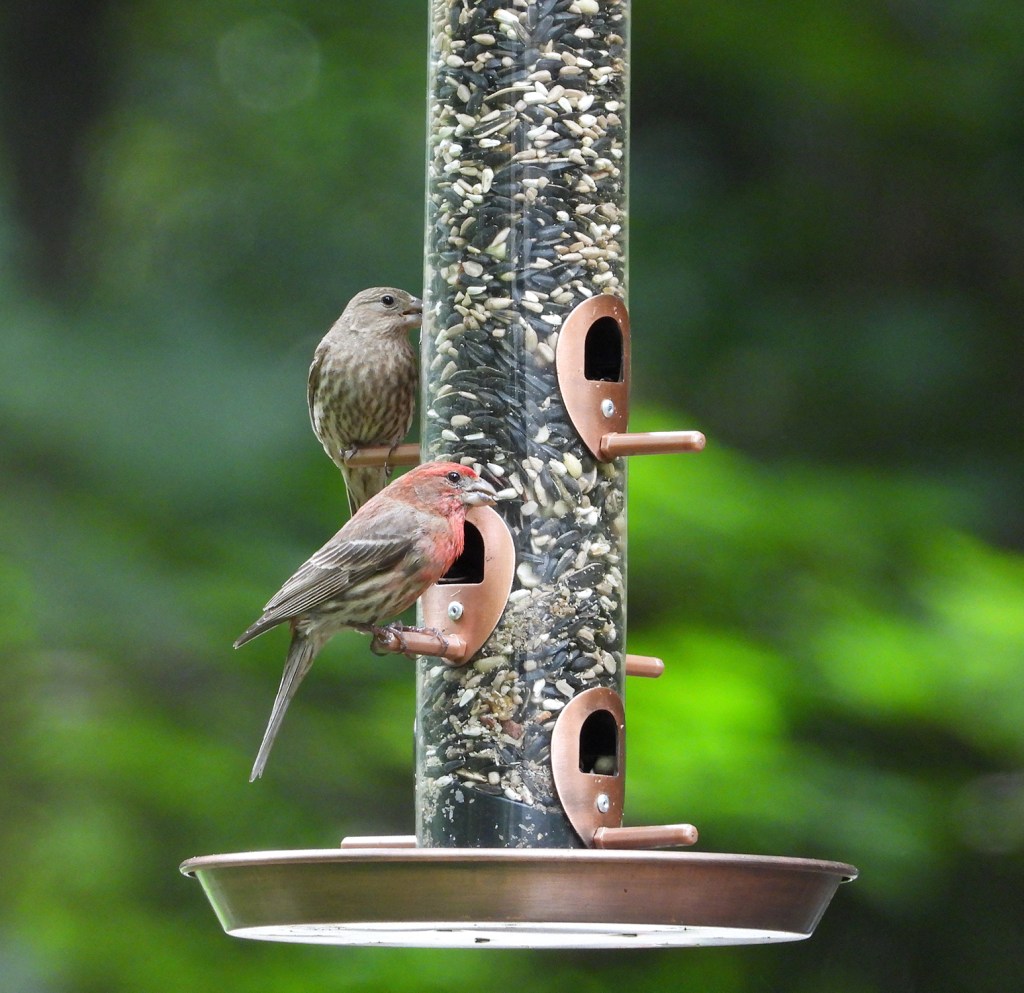
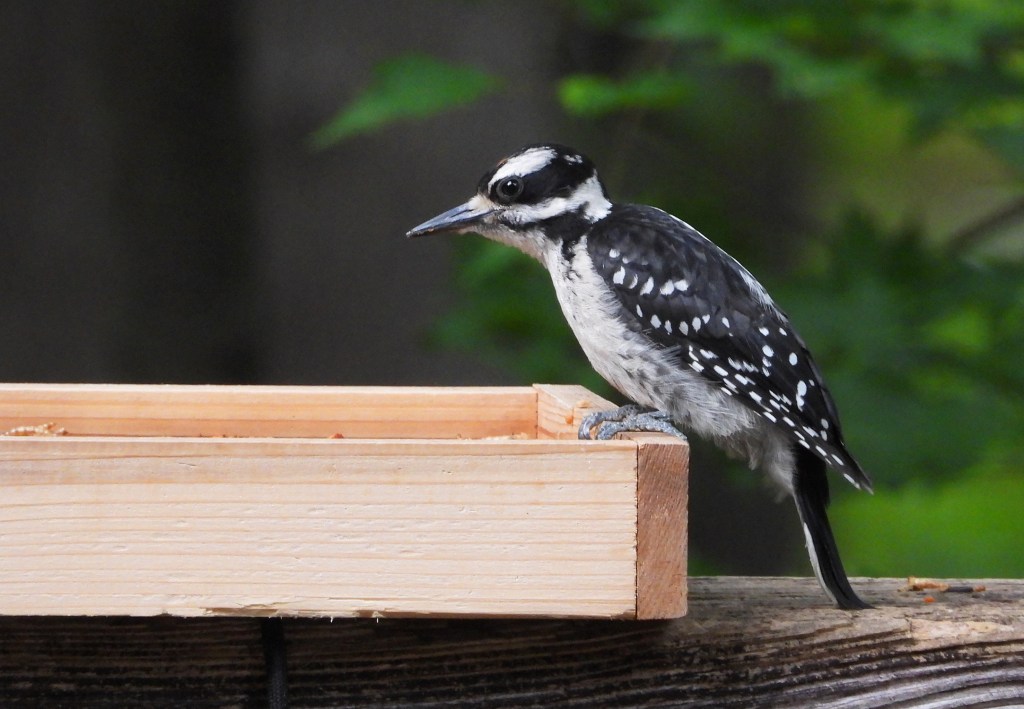
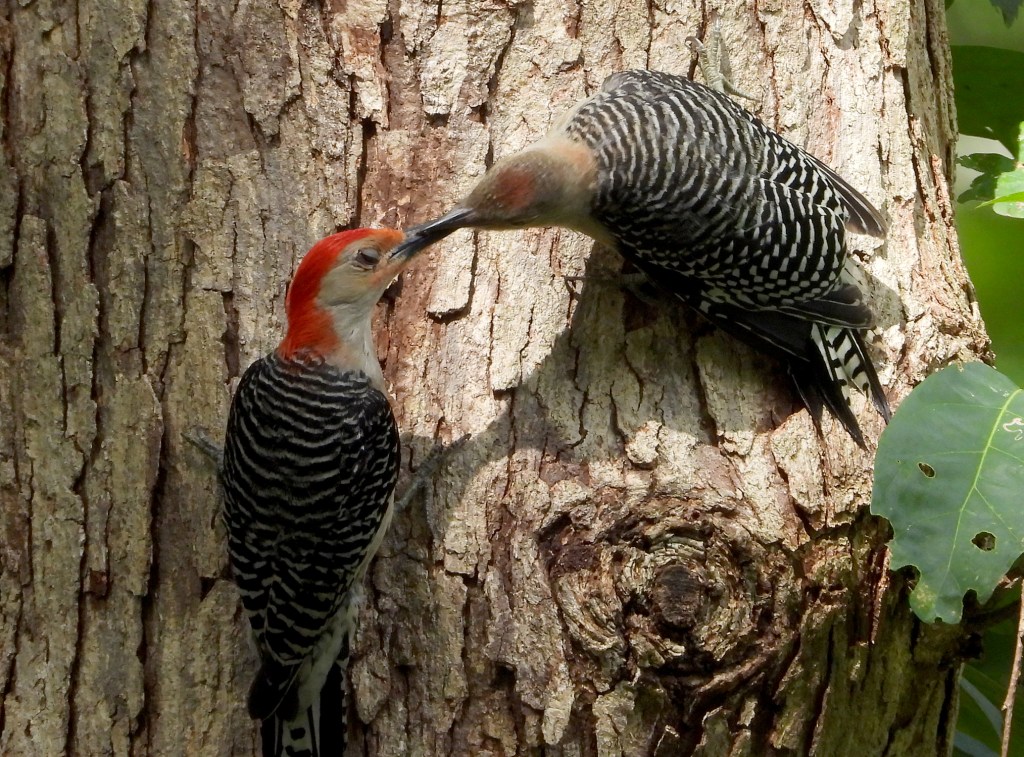
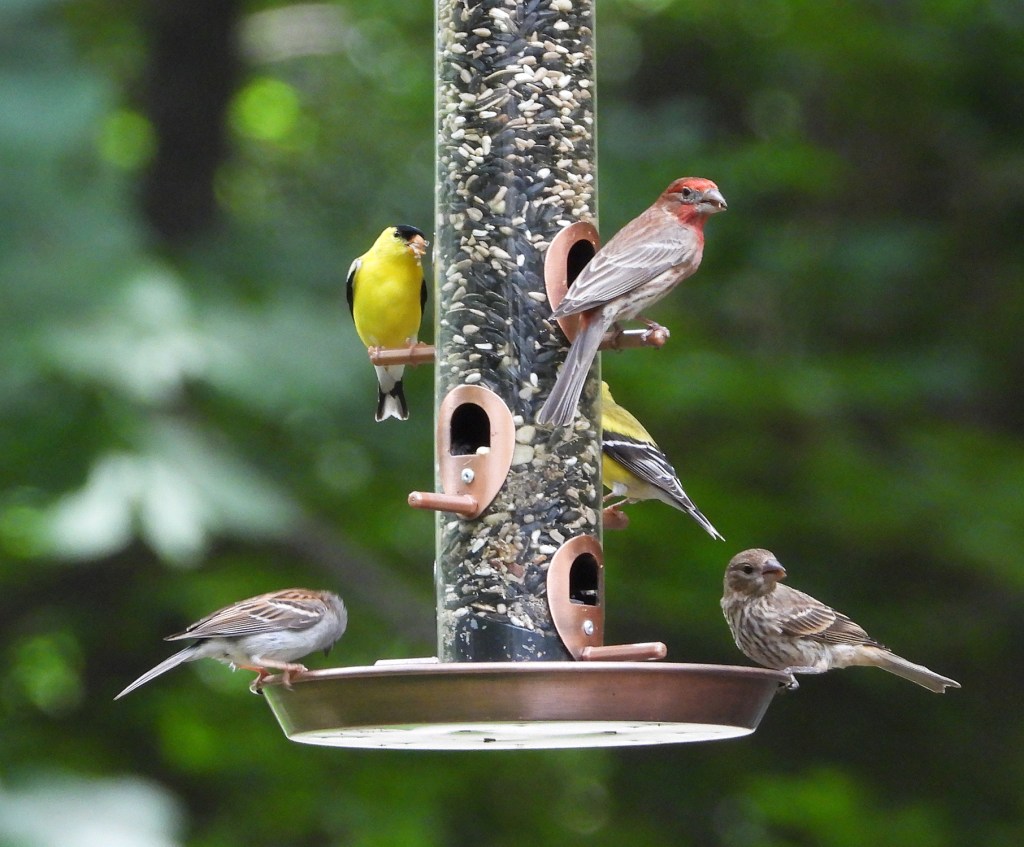
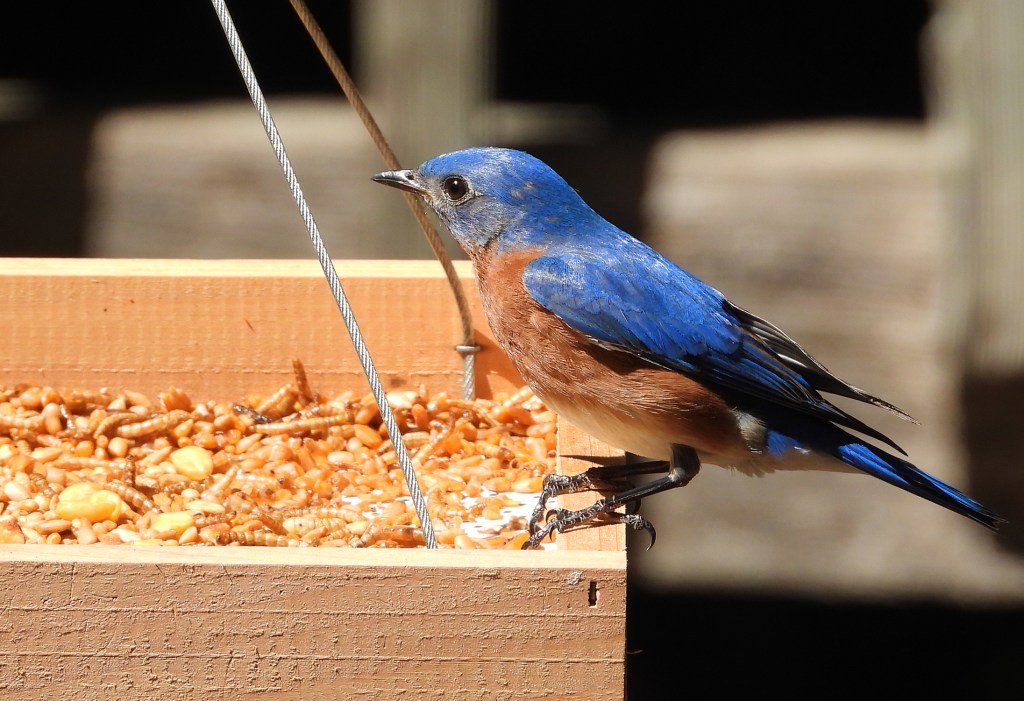
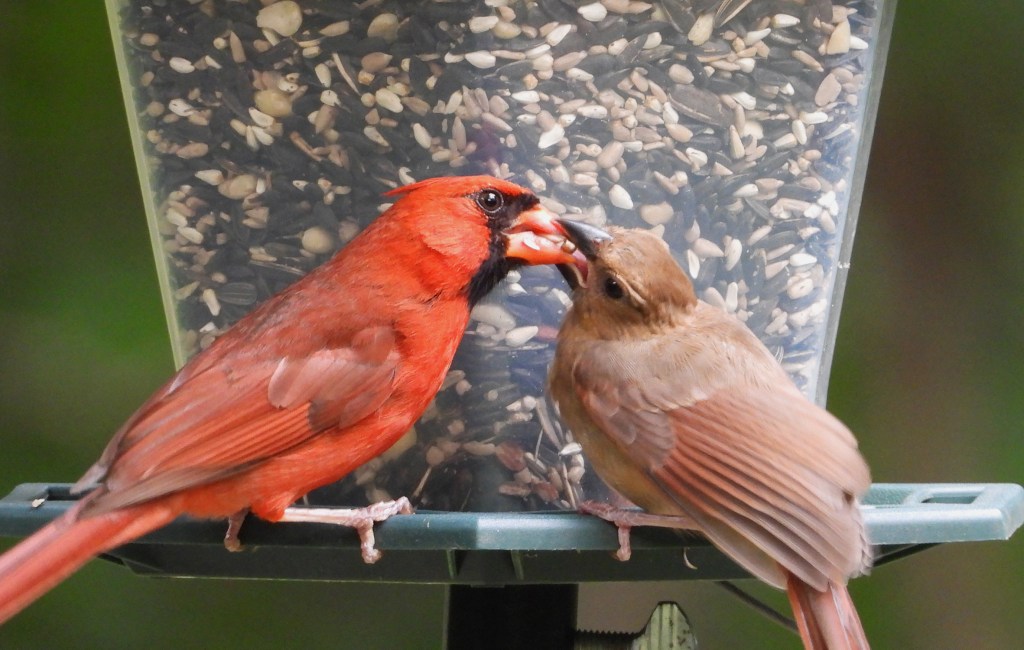
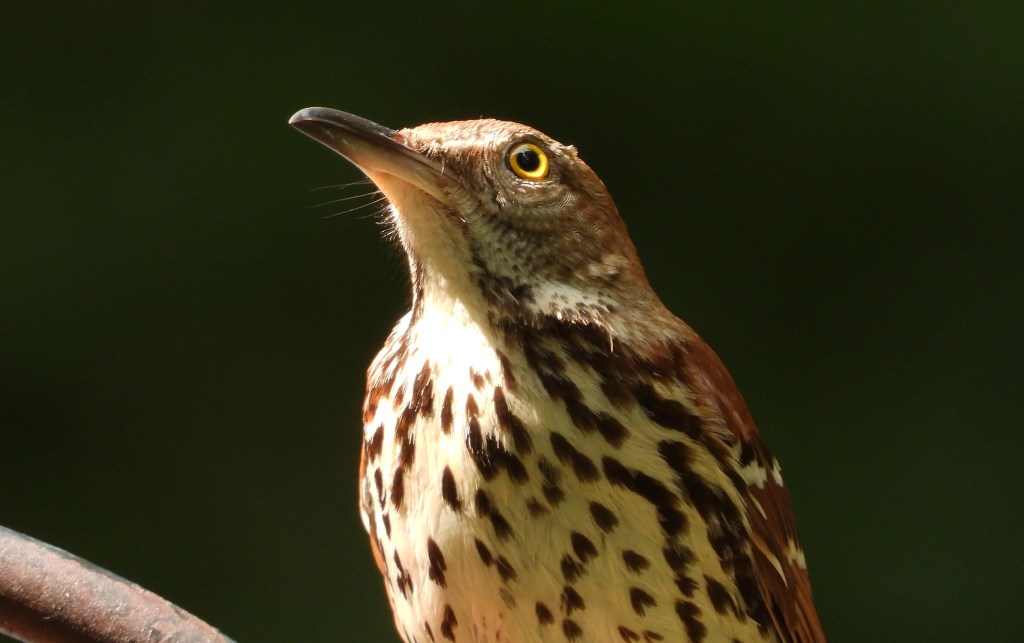
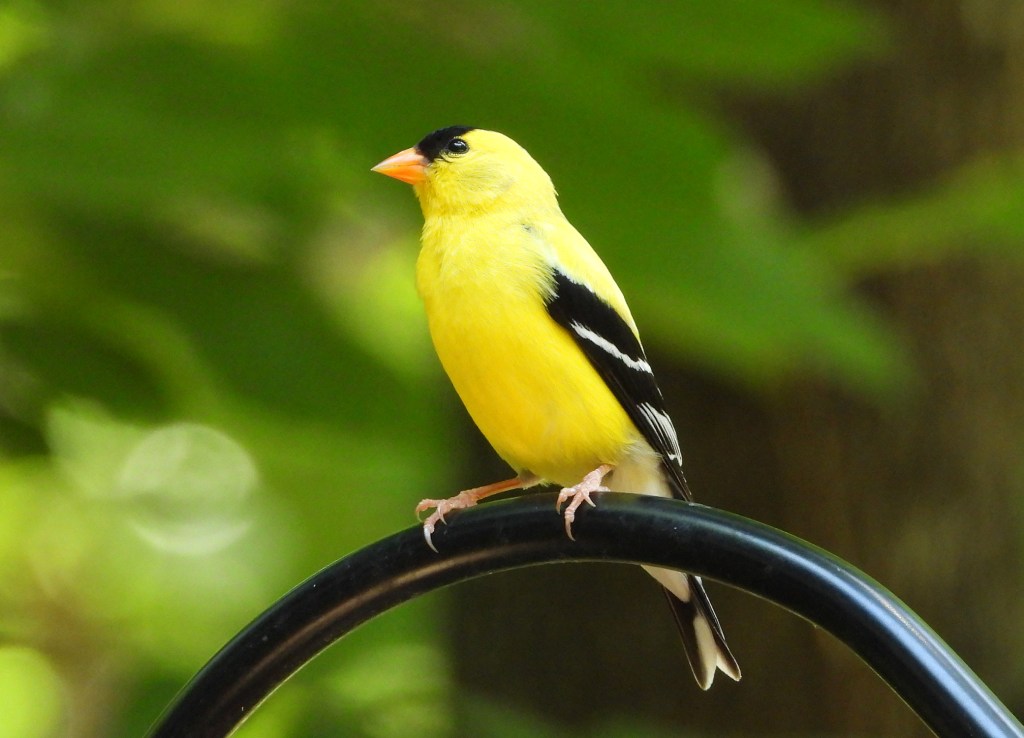
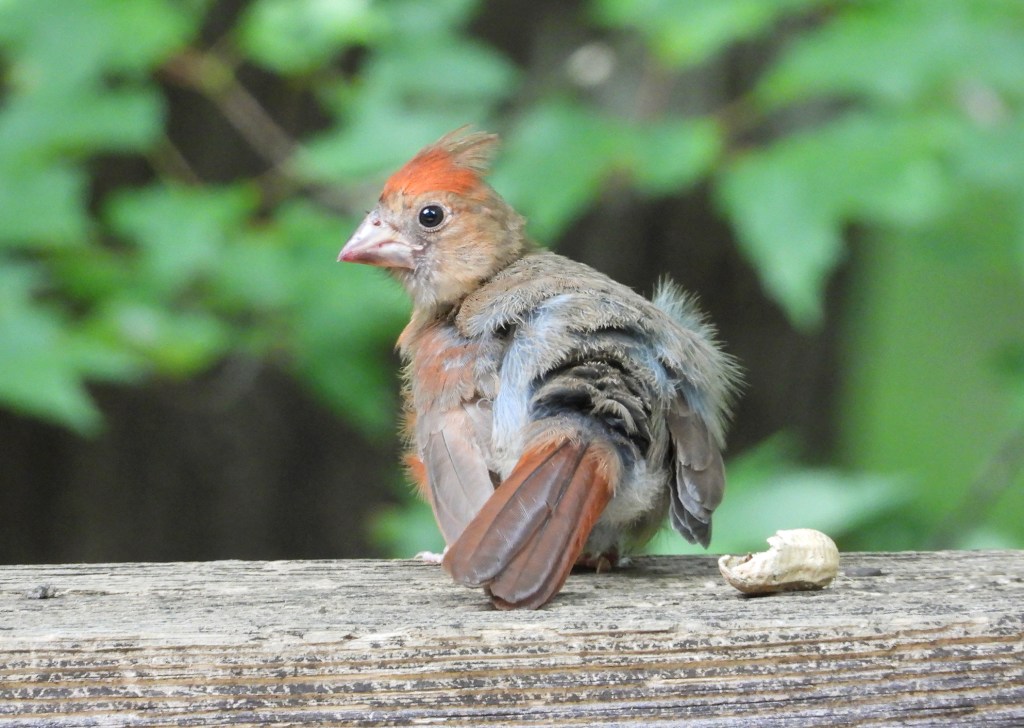
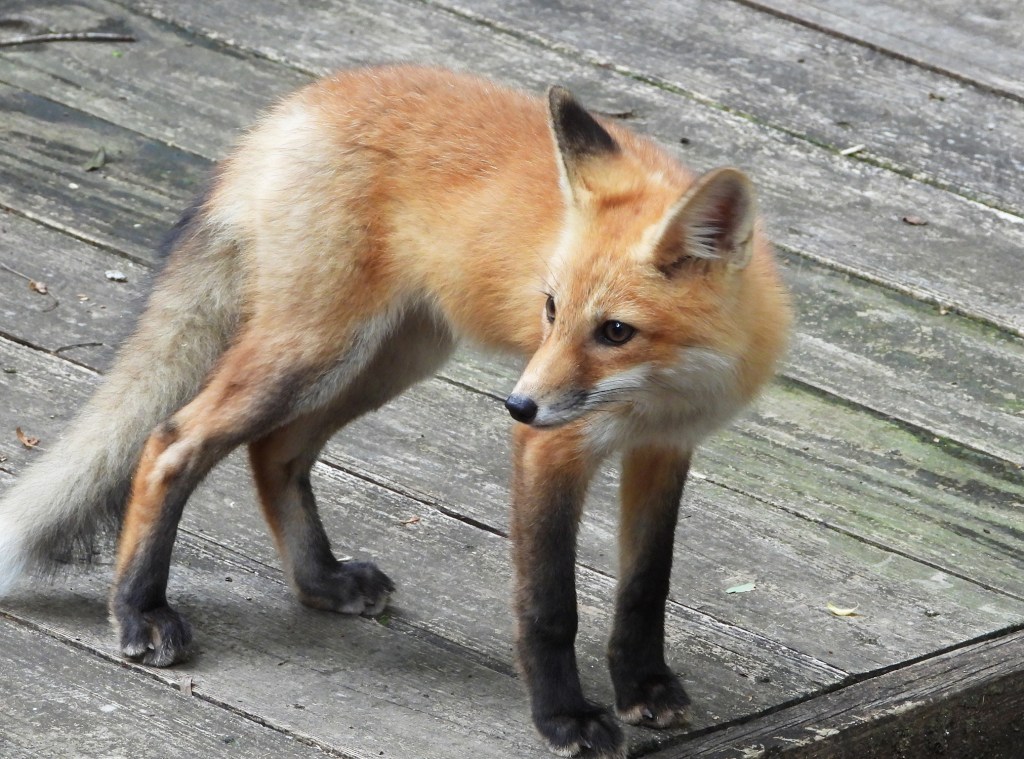
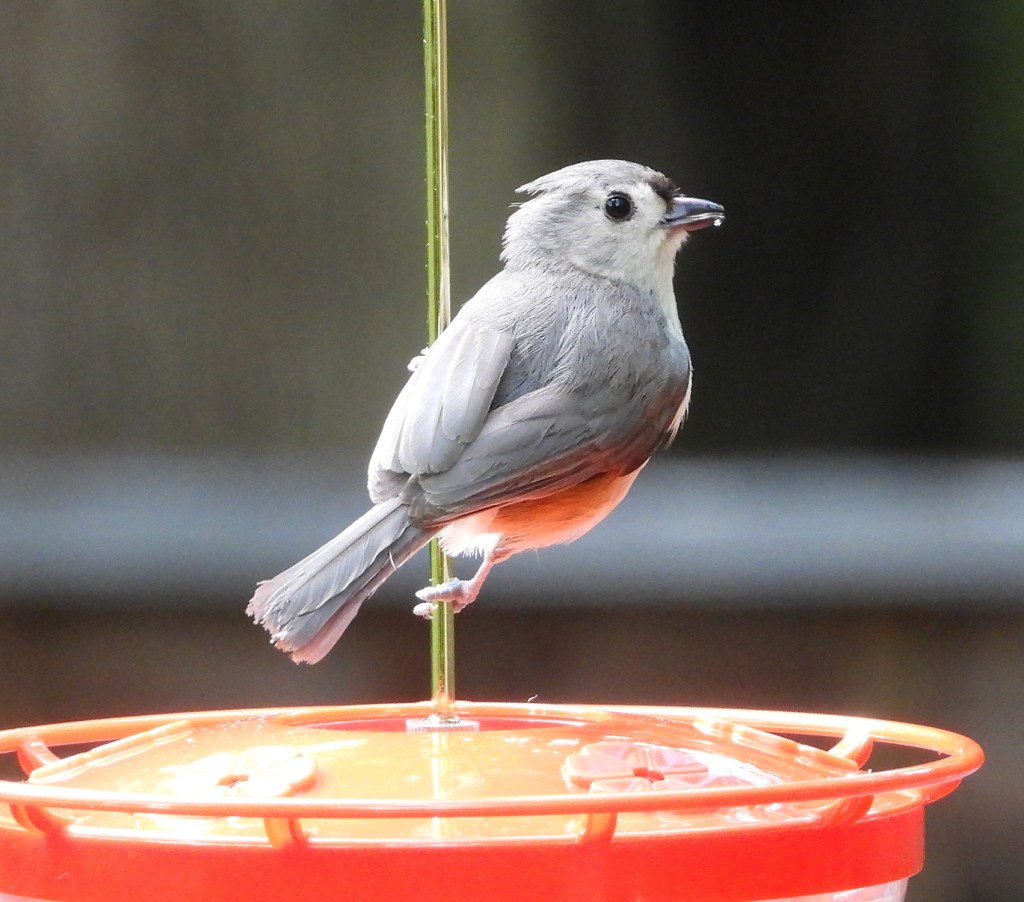
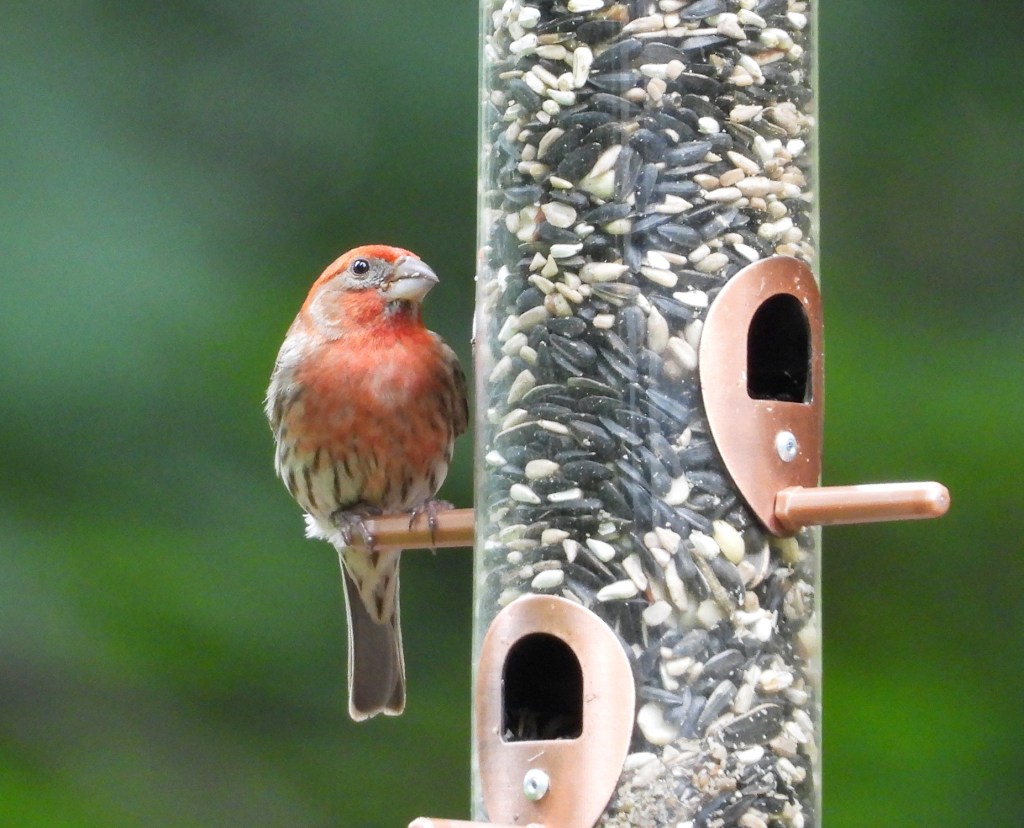
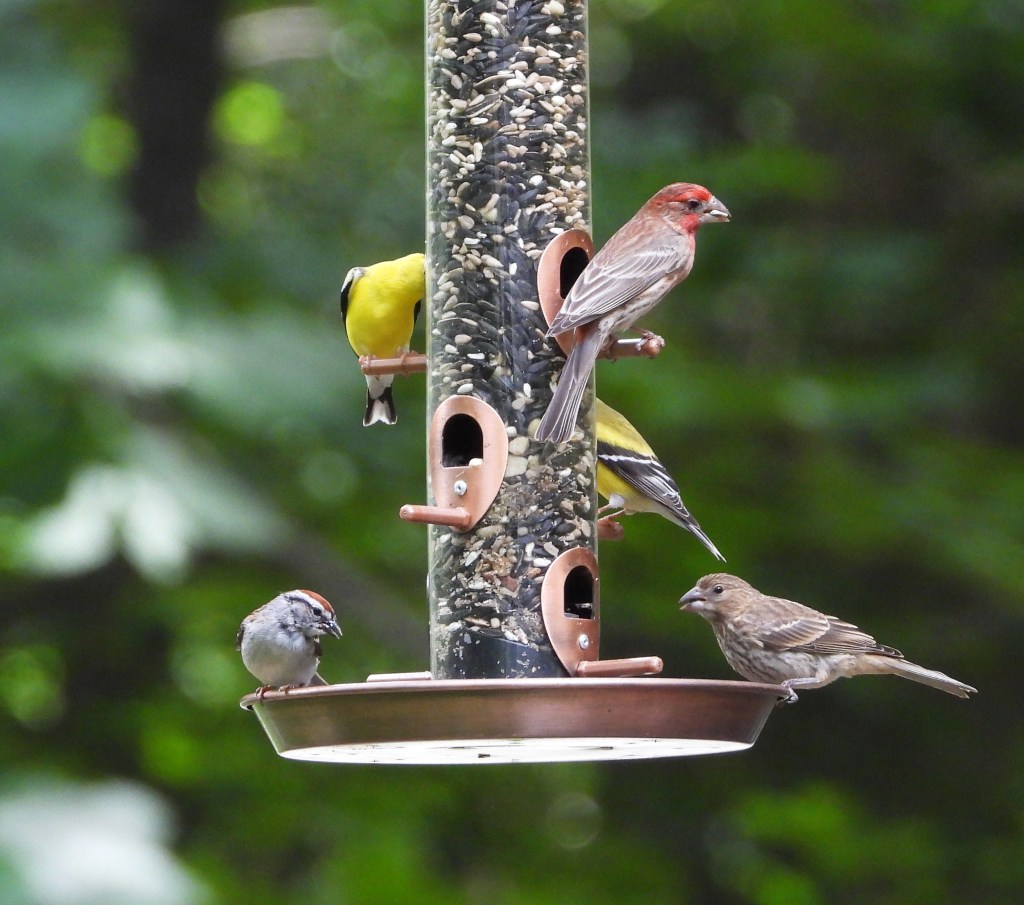
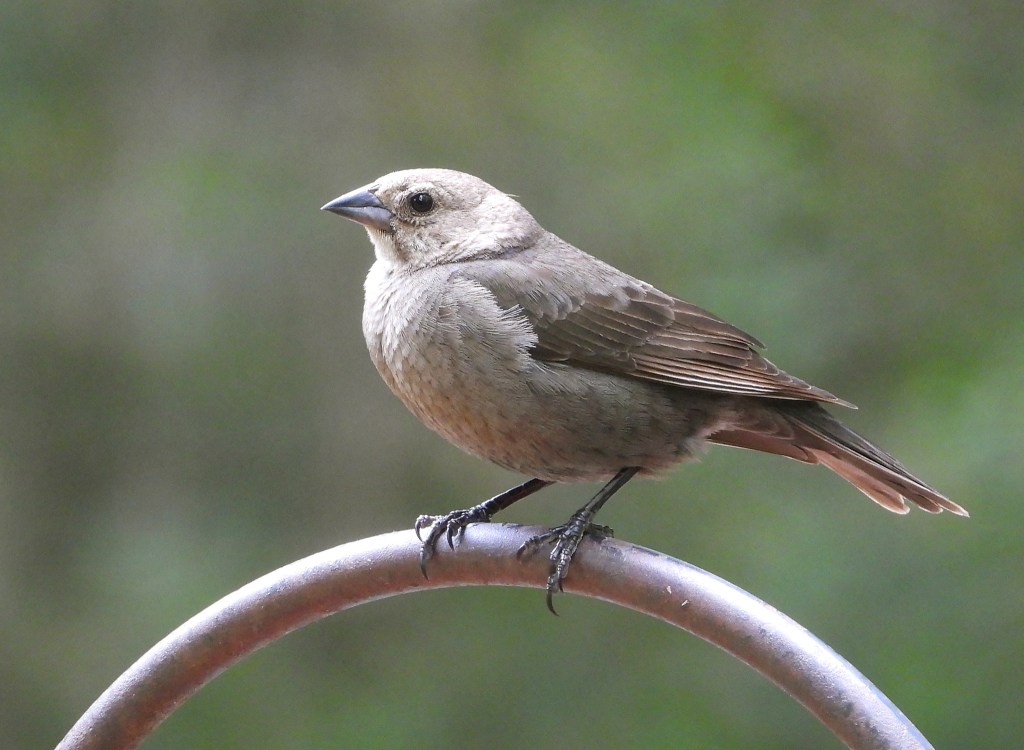
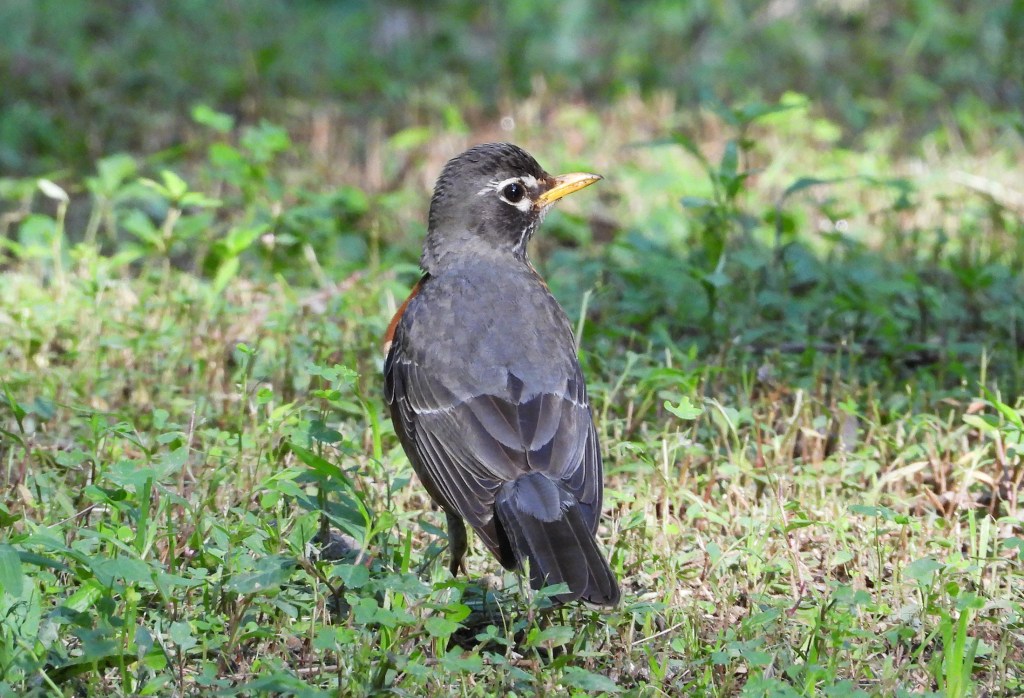
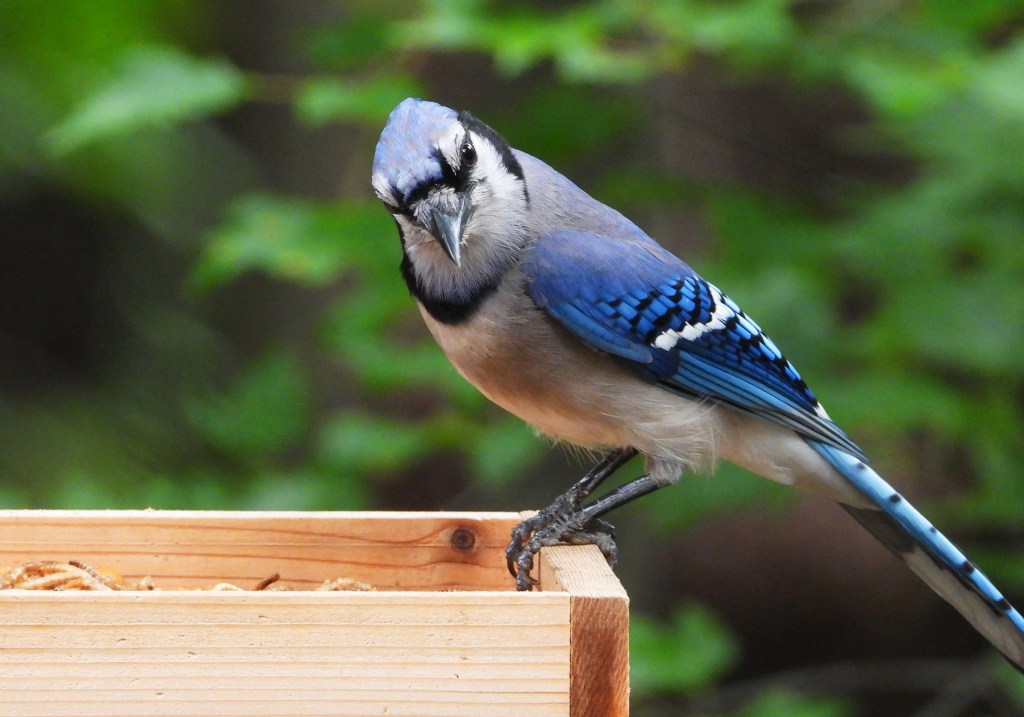
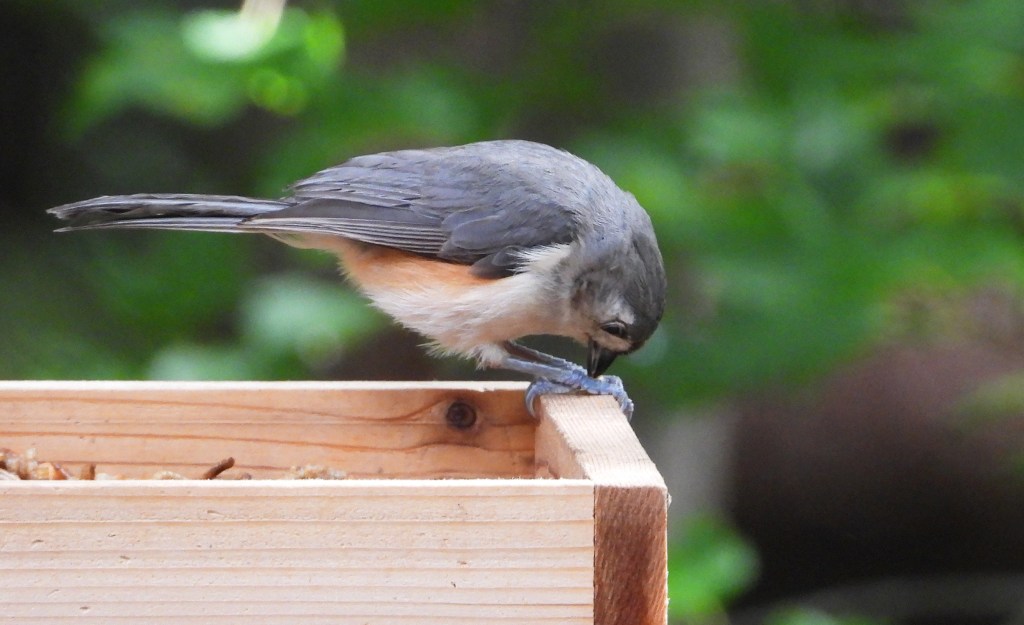
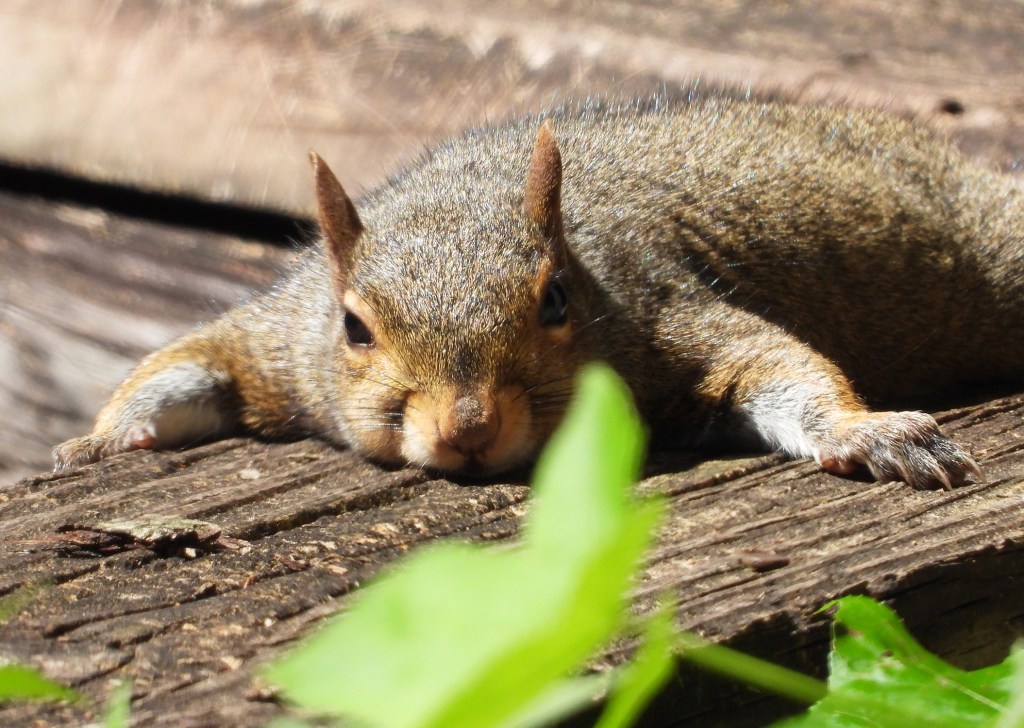
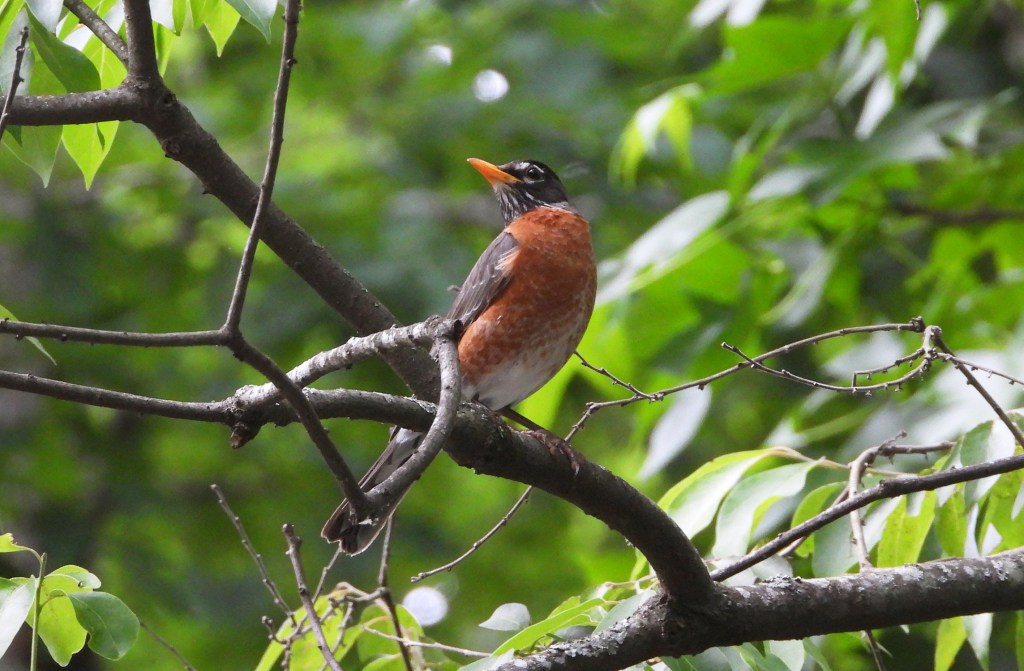
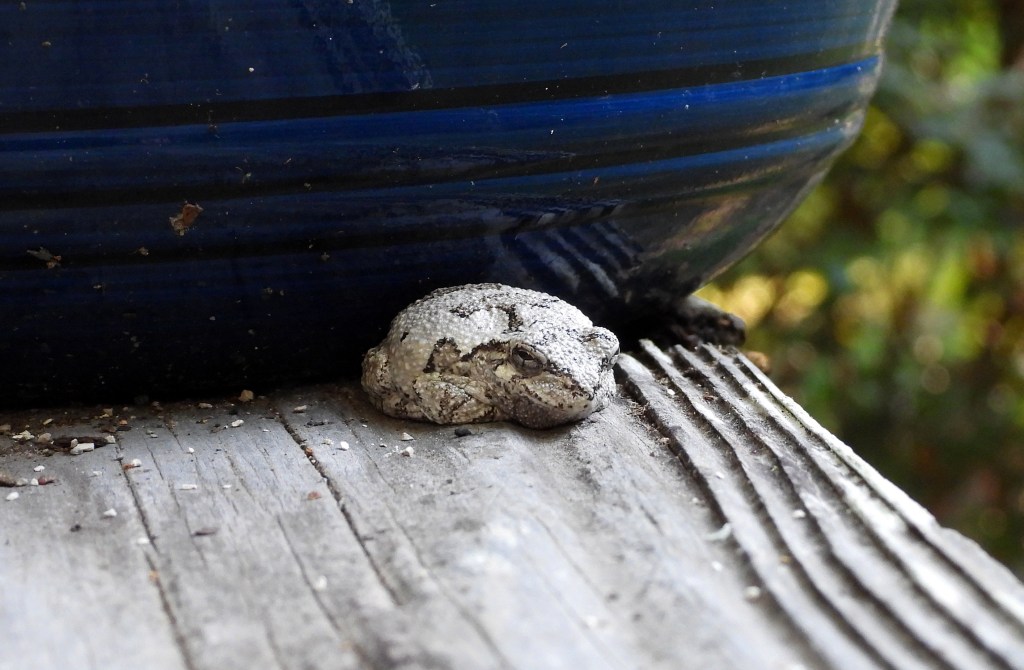
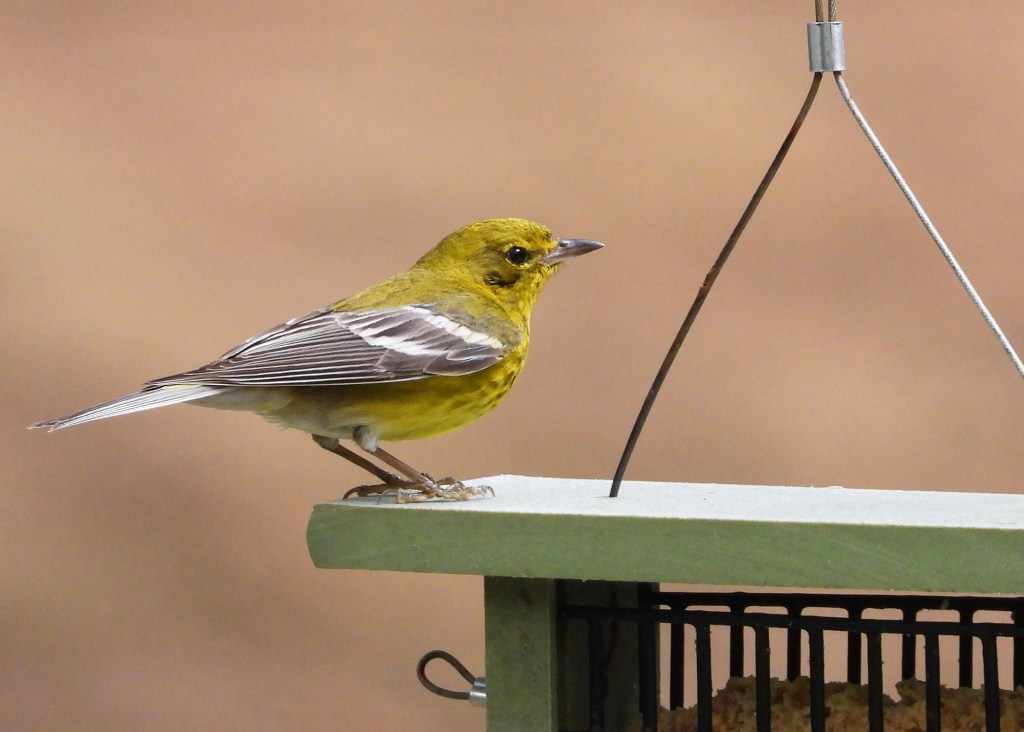
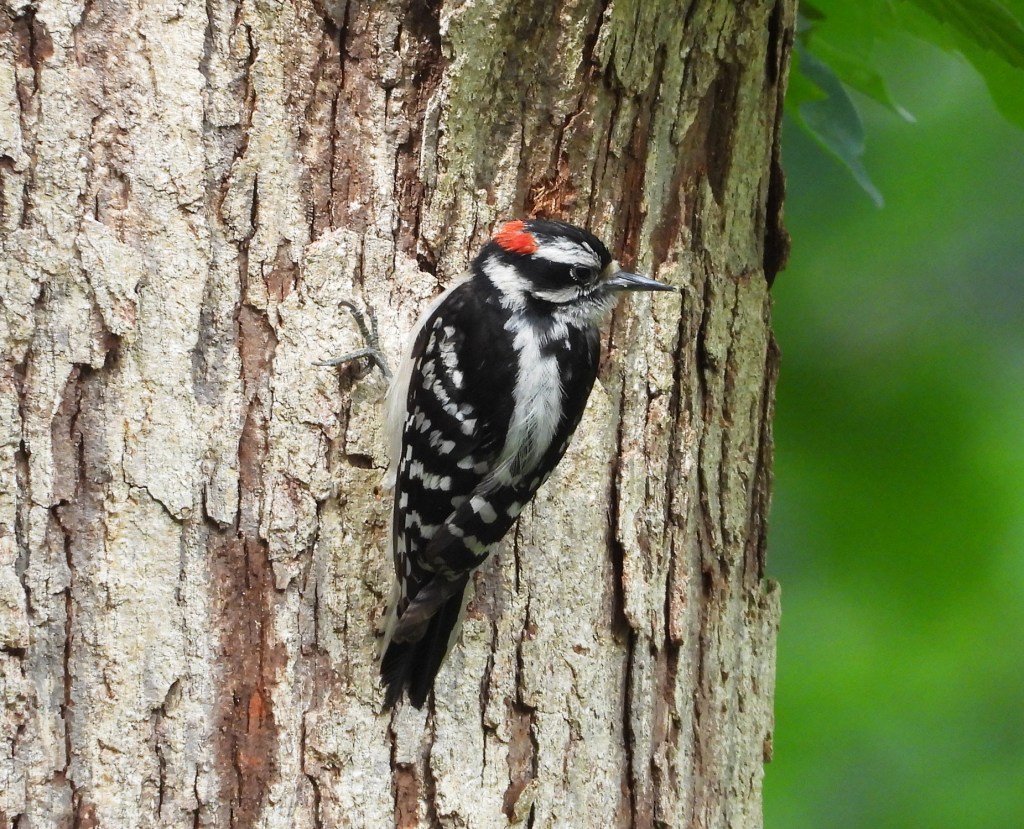
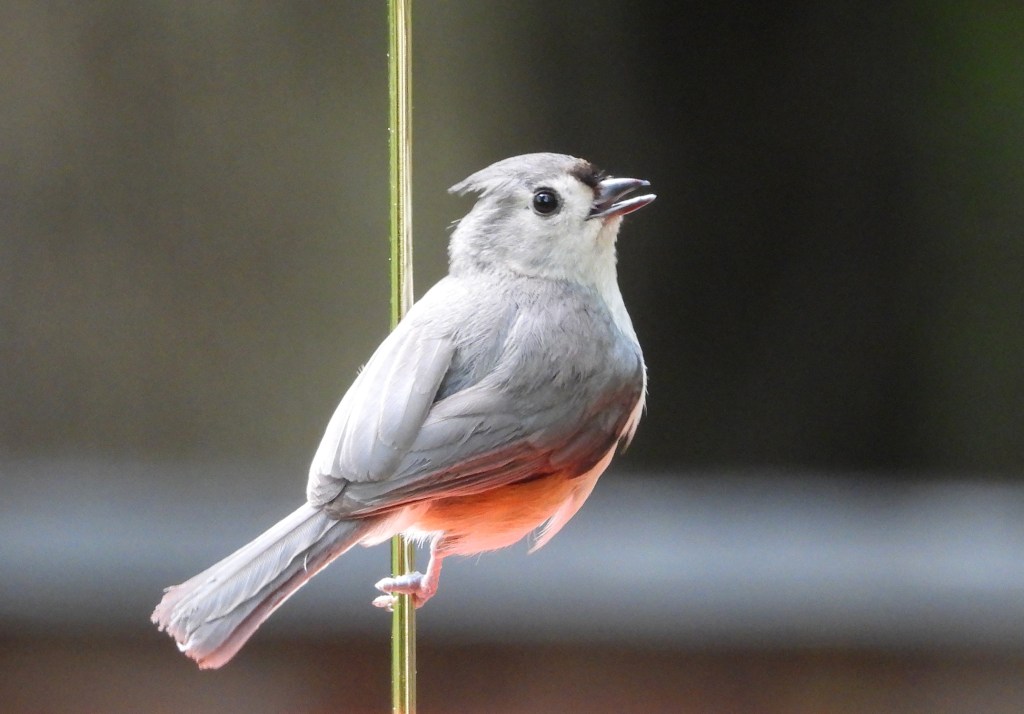
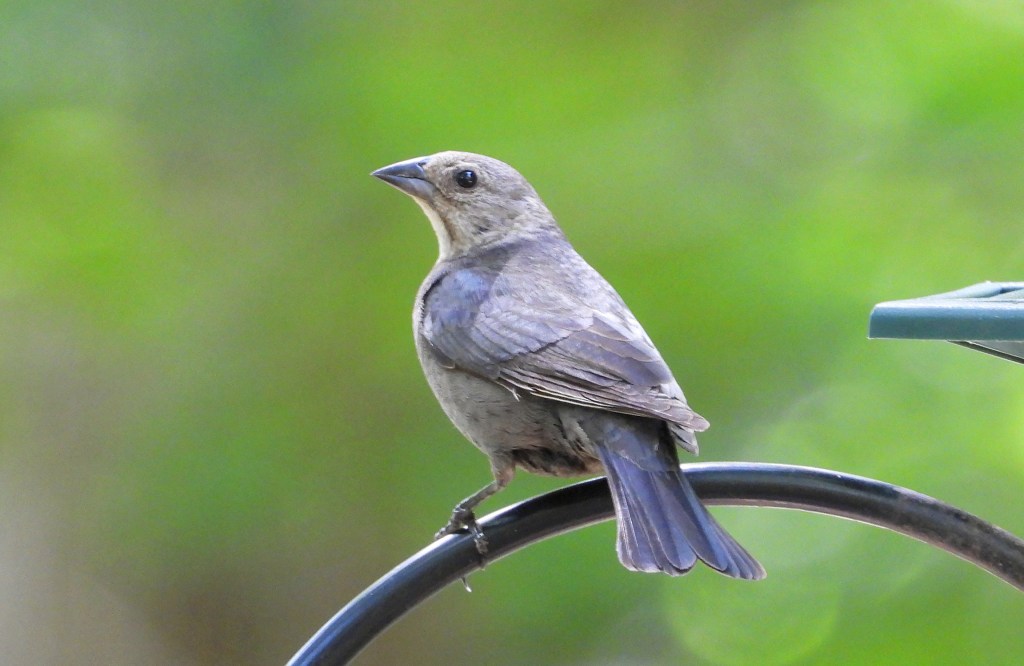
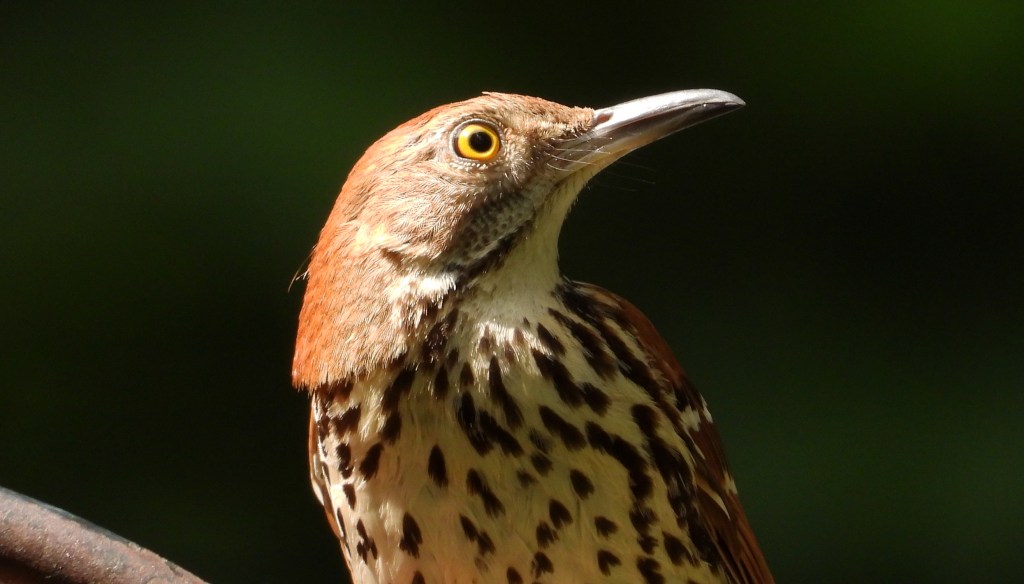
Blue JayAmerican Goldfinch (male)Ruby-throated Hummingbird (male)Red-bellied Woodpecker (male)Red-bellied Woodpecker (juvenile)Mourning DoveHouse Finches (female, top and male, bottom)Hairy Woodpecker (juvenile)Red-bellied Woodpecker (male) feeding a juvenileClockwise from top: House Finch (male), American Goldfinch (female), House Finch (female), Chipping Sparrow, American Goldfinch (male)Eastern Bluebird (male)Northern Cardinal (male) feeding a juvenileRed-bellied Woodpecker (female)Brown ThrasherAmerican Goldfinch (male)Northern Cardinal (juvenile). Note the empty peanut shell. That was probably dropped by a Blue Jay.Red Fox. You can find more photos from my recent encounter with a fox here.Tufted Titmouse. This bird is perched on my hummingbird feeder. You can see that there is a small well in the center of the feeder where the rod attaches. That well is an ant moat and is filled with water (because ants can’t swim, the moat prevents them from reaching the hummingbird nectar). The little songbirds often drink from there, which is what this titmouse is doing.House Finch (male)Clockwise from top: House Finch (male), American Goldfinch (female), House Finch (female), Chipping Sparrow, American Goldfinch (male)Brown-headed Cowbird (female)American RobinEastern Bluebird (male)Blue JayA Tufted Titmouse eating a seed. These little birds eat by holding a nut or seed in their feet and then bashing it with their bill. Eastern Gray SquirrelAmerican RobinCope’s Gray Tree Frog (I think). I was sitting outside yesterday afternoon photographing the birds when I spotted somthing sticking out from the bottom of one of my flower pots. I thought it was a piece of debris or leaf litter, and when I went to remove it, I realized it was a tiny individual. I am not a herpetology expert by any means, but I think this is a Cope’s Gray Tree Frog.Mourning DovesPine Warbler (male)Downy Woodpecker (male)Eastern Gray SquirrelBlue JayWhite-tailed Deer (female)Downy Woodpecker (juvenile) and a Chipping Sparrow in the backgroundTufted TitmouseBrown-headed Cowbird (female)Brown Thrasher



Leave a Reply